
“Hello, Uncle Sam. You saw the people on the roof, on the bridge, and in the waters. News people called us refugees, but we’re the native sons and daughters of New Orleans. We are New Orleans. And no matter what they say, our ancestors say we are here to stay.”
New Orleans native and “First Lady” of No Limit Records, Mia X, sings these powerful words in the Lower Ninth Ward, adjacent to the exact site where the levees broke 20 years ago, causing what would become the costliest hurricane ever recorded in the United States.
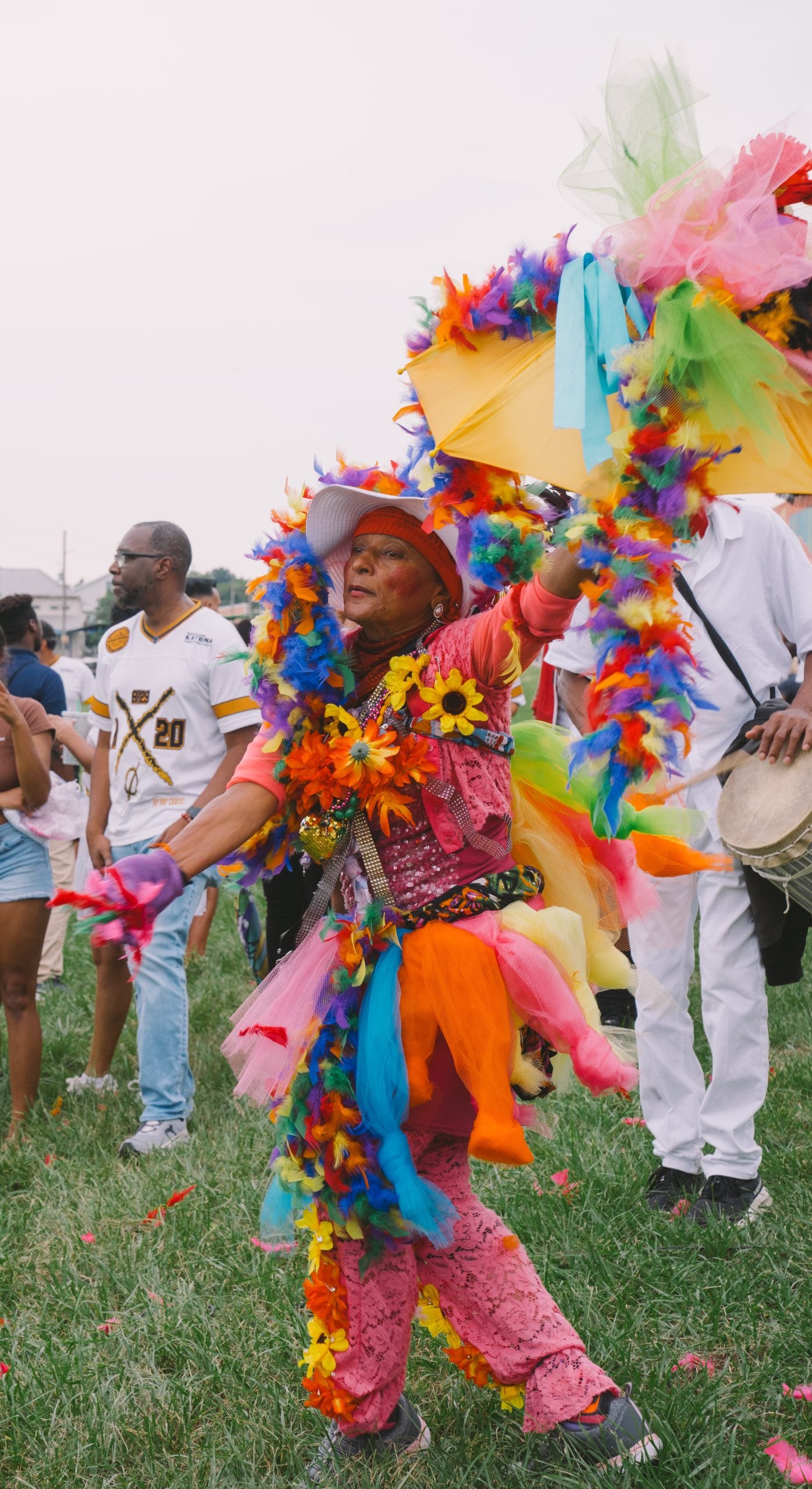
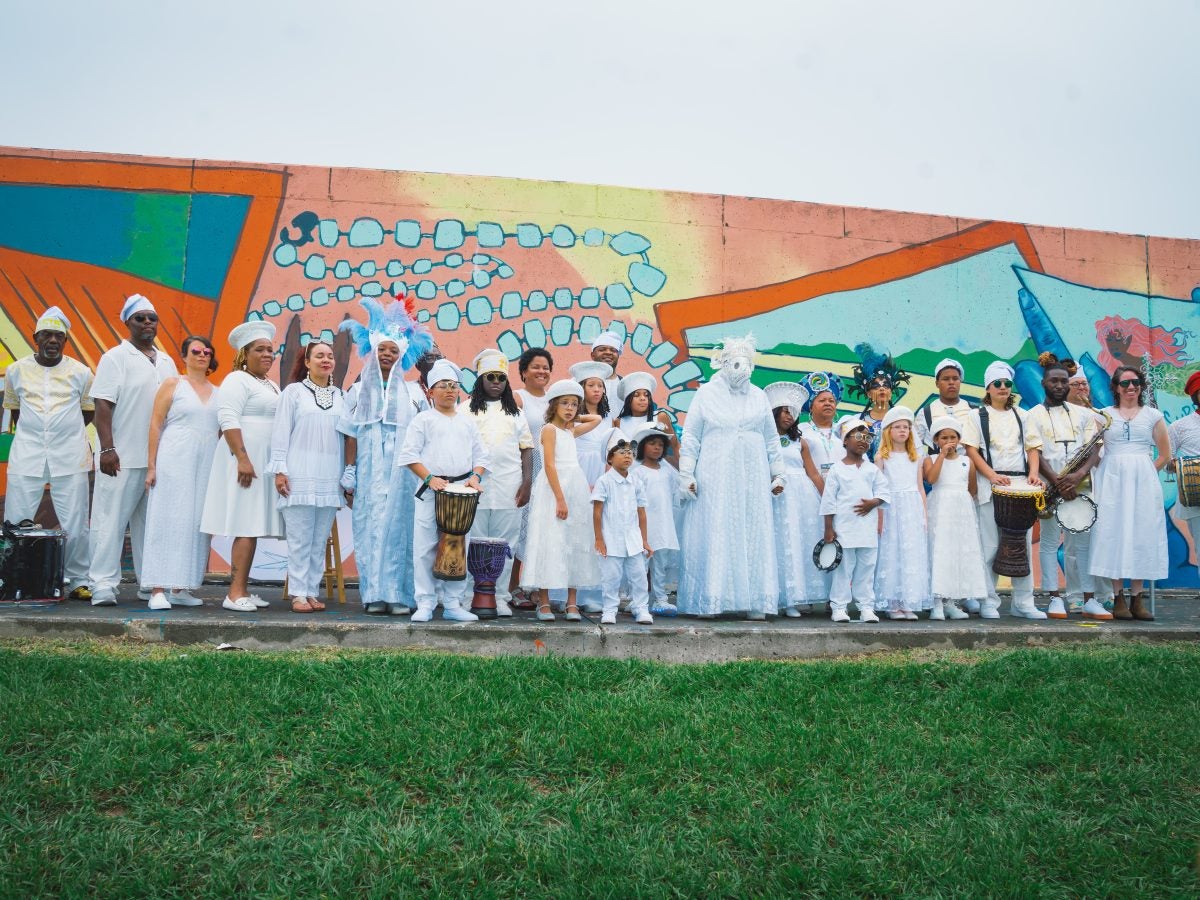
What was a category 3 storm when it initially made landfall on August 28, 2005 intensified into a devastating disaster that killed hundreds of New Orleanians and displaced thousands. What was perhaps most catastrophic to some was governmental agencies’ failure to adequately and equitably help citizens recover and rebuild. Yet somehow, New Orleanians continuously turn this moment of tragedy into a moment of reflection. In partnership with New Orleans Katrina Commemoration Incorporated (NOKCI) and the Hip Hop Caucus, the city gathers annually by the levees on August 29 to honor the resilience of the community and celebrate the memory of their loved ones, followed by a second line from the Lower Ninth Ward to the Seventh Ward.
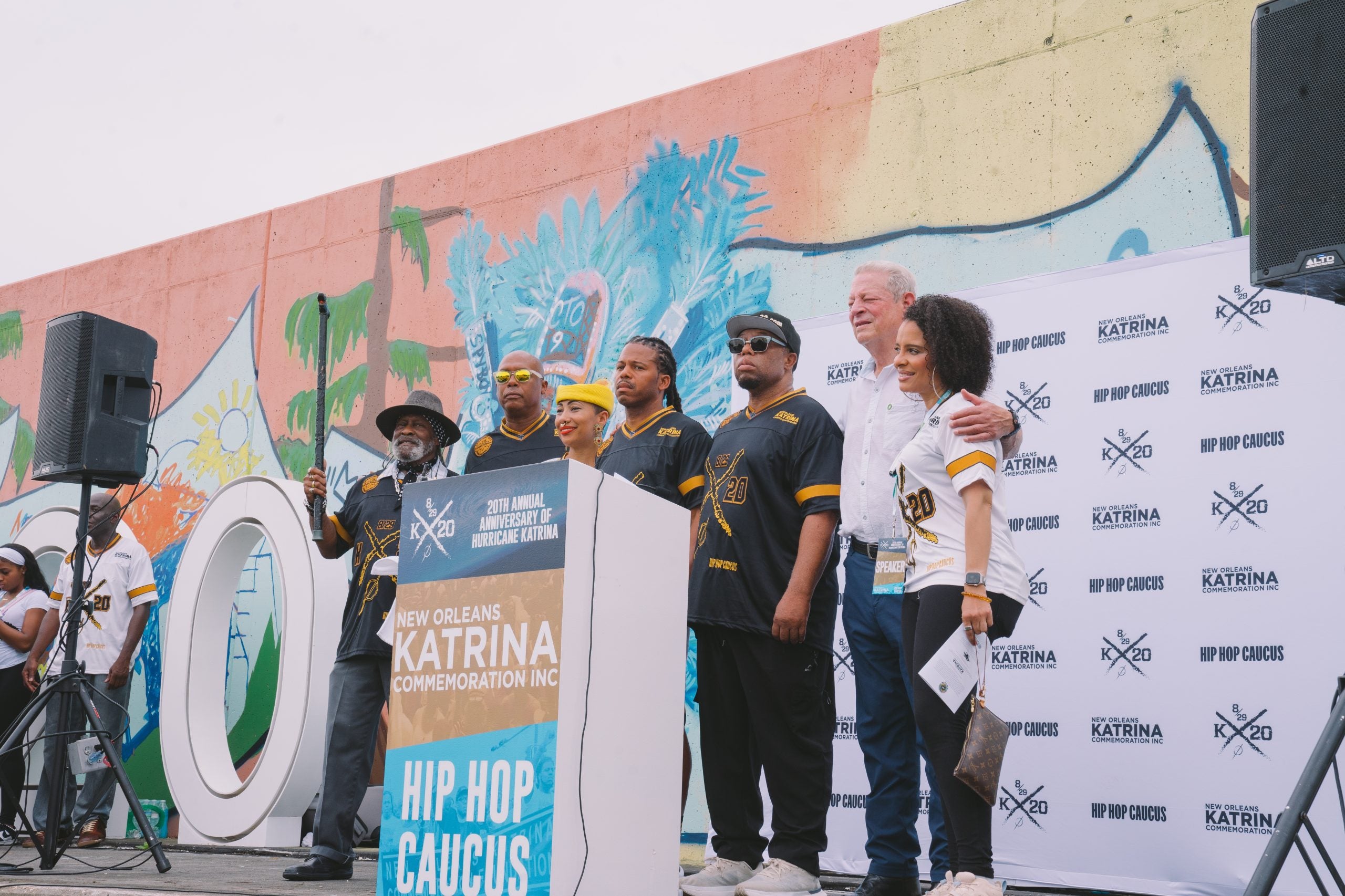
“This moment is for the people of New Orleans,” says New Orleans artist and community leader Sess 4-5. “One of the reasons we do this is because of all the people who lost their lives 20 years ago and all the New Orleanians that came back when they gave us a one-way bus ticket all over America. We had to fight for the right to return.” As a co-organizer of the first community-led remembrance of Katrina’s devastation, Sess 4-5 continues to remind the people of New Orleans that what happened two decades ago was for a God-given purpose.
“Sometimes when stuff happens to us, we say, ‘God why me?’ It’s because God picked you for the struggle, for the thing you got to go through so that you, who comes out the other side of that, [become] a stronger you. So New Orleans…God picked us, and 20 years later, look at us now. It’s not all doom and gloom.”
While many infrastructural improvements have been made over the years post-Katrina, including a new, $14.6 billion Hurricane and Storm Damage Risk Reduction System (HSDRRS) by the U.S. Army Corps of Engineers, there is still more progress to be made, especially in more underserved neighborhoods, such as the Lower Ninth Ward.
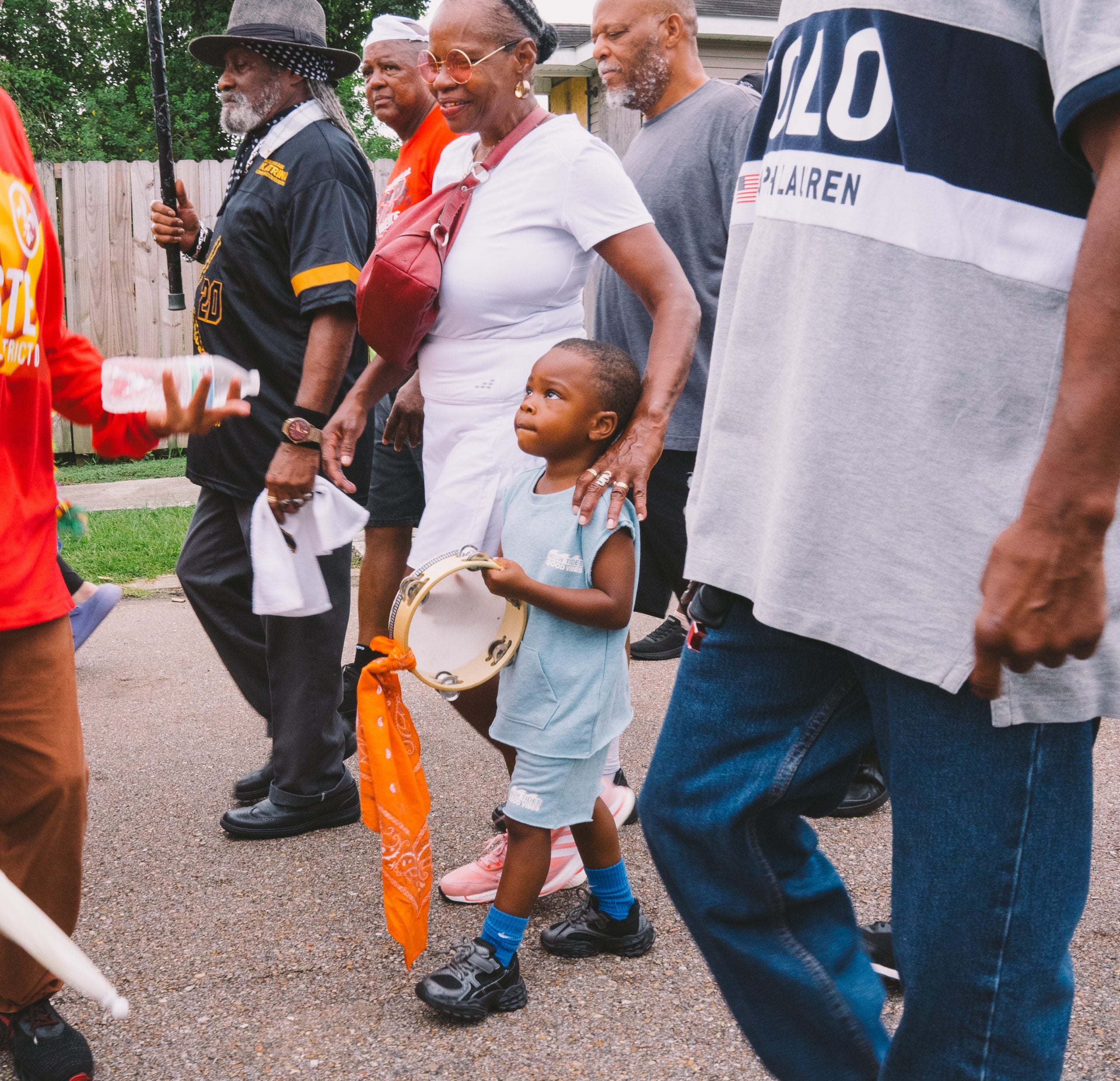
“In the words of bell hooks: ‘The rage of the privileged is not the same as the rage of the oppressed,’” says Rev. Lennox Yearwood, president and CEO of the Hip Hop Caucus, during the 20th Annual Commemoration March and Second Line. “The same Hurricane Katrina that might have affected one person wasn’t the same Hurricane Katrina that affected some other folks. There were some folks back in 2005 who were able to leave New Orleans, reclaim their lives, come back, and live their lives because of privilege. Then there are folks right here whose lives [still] look exactly like it did 20 years ago. It is time for the oppressed to stand up…and say enough is enough.”
“Our city suffered on global television,” says Dr. Cassandra Shepard of Xavier University of Louisiana, a member of the New Orleans Katrina Commemoration Foundation Committee. “They had [then-President of Cuba] Fidel Castro trying to send doctors here to help us. That’s how bad the problem was.” Shepard is a New Orleans native and assistant professor of African American and Diaspora Studies. “Like a lot of people inside of the city, that moment was transformative for me. I’ve always been a radical, revolutionary, power-to-the-people kind of lady, but I think that experience hammered it home for me even more. It showed me the ways that black people can be treated inside of this nation.”
As someone who evacuated but was still directly impacted by the storm, Shepard used her lived experience to influence her research on colonial disasters. Not only did she choose Hurricane Katrina’s impact on New Orleans as her first study but she inspired her students to do the same. “I gave them the option of either taking a quiz or doing research that could help people understand what’s happening inside the community. At least 20 students turned in work, and then I pulled from what was the best.” Of the 20 students, six of them had their research displayed at the 20th Annual Commemoration Rally at Hunter’s Field for all to see. Topics range from public health, to cost of living and affordable housing, to racial demographics and how the loss of population has affected New Orleans’ political power and representation post-Katrina.
“Katrina shifted the entire country – not just New Orleans. It’s important to know and remember what happened here, not just for those of us who live here…but also for anybody else who cares about America because what happens here is happening all over the country, regardless of if they have a hurricane or not. This is one of those “never forget” moments. Everybody wants to never forget September 11th, [but] this is a never forget moment for us.
Former Danity Kane member and New Orleans native Dawn Richard shares the same sentiment and says not only should we never forget, but we should also take action. “If you love this city, I ask that you pour into this community,” Richard says. “A plant or a flower can’t succeed or thrive coming once every 20 years. We need daily pouring, daily sunlight, daily goodness, daily attention. Treat this community with care, and treat our stories with care. Pour into our people so we can continue to grow as a community. That’s what I care about.”
While many around the world may only recall the images of houses underwater and families carrying each other on their backs and in their arms seeking shelter, survivors like New Orleans artist and performer at the 20th Annual Commemoration event, Allay Earhart, still relive that day vividly.
“I turned nine years old that day, and today, I’m actually having my first birthday party since Katrina,” says Earhart. Over the years, Earhart’s story was told through a viral photo that depicts his father, Alvin Williams, carrying the rapper’s dehydrated body in front of the National Guard, begging and pleading for them to help him and his family. “We all experienced trauma and grief that day, but I guess for me, it was just a tad bit different based off of the photo. That photo being captured showed me that what we went through, there was a purpose for it, you know what I mean?”
Twenty years later, he is now sharing his story through music to pay tribute to the storm, the lives lost, and those continuing to heal. “Since Katrina happened, the city has stayed prideful,” he says, describing why this year is so monumental. “The spirits of the city stayed high. I think that more people are starting to heal. The healing is starting to come about a little bit more, so people are coming out more.”
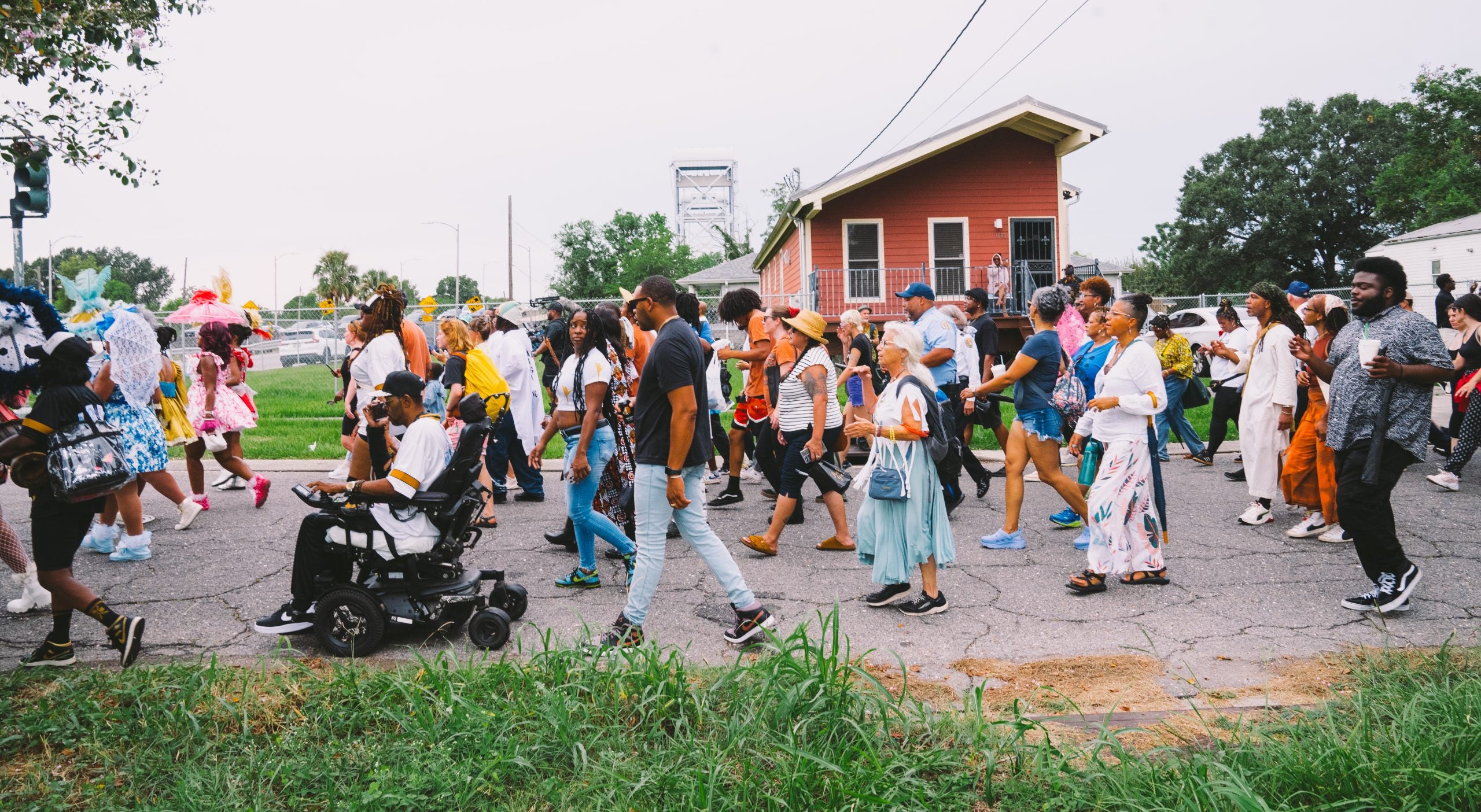
“Regardless of what’s going on in your life, the triumphs that you ultimately have only come when you keep swimming,” Earhart shares. “And I think that is a beautiful metaphor for our city when it comes down to Katrina. It’s like, we still kept it moving. We kept swimming, even throughout all of the flood, all the turbulence, and we’re still here.”
“Our children were fighting. They were being bullied. They were depressed. They were living with parents who were depressed. Some of them lived four days in a house with deceased relatives, on the bridge, in the water. But through it all, some of those very children are our educators. They are doctors. They are lawyers. They are entrepreneurs. They are entertainers. Because that’s who we are,” Mia X says.
From Hurricane Katrina, to the tragic Hard Rock collapse in 2019, to the catastrophic Bourbon Street attack on New Year’s Day just this year, and more, the word “resilient” has become a buzz term for many when asked to describe New Orleans in one word. But New Orleans is more than resilient. Rather than just recovering time and time again, New Orleans and its people have evolved and are becoming stronger and better than before. This community has intentionally built the capability to withstand any challenge that comes their way. That’s not resilience; that’s prosilience.