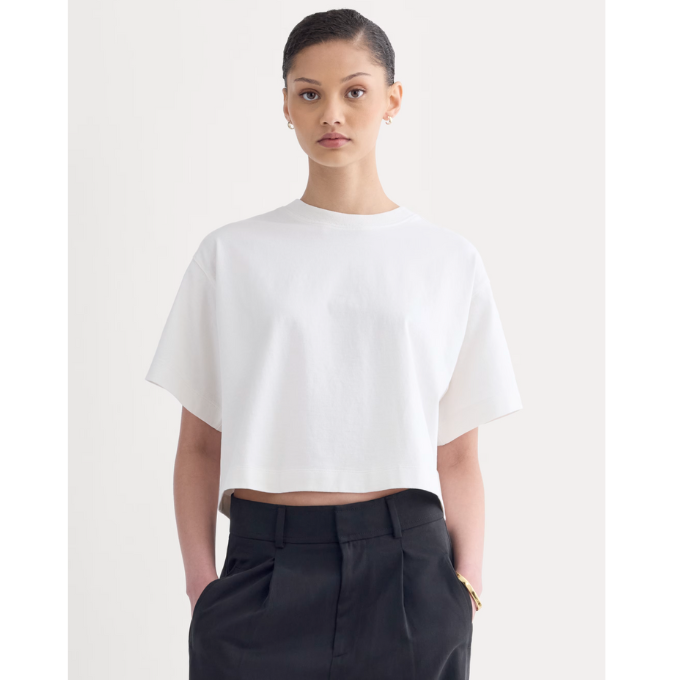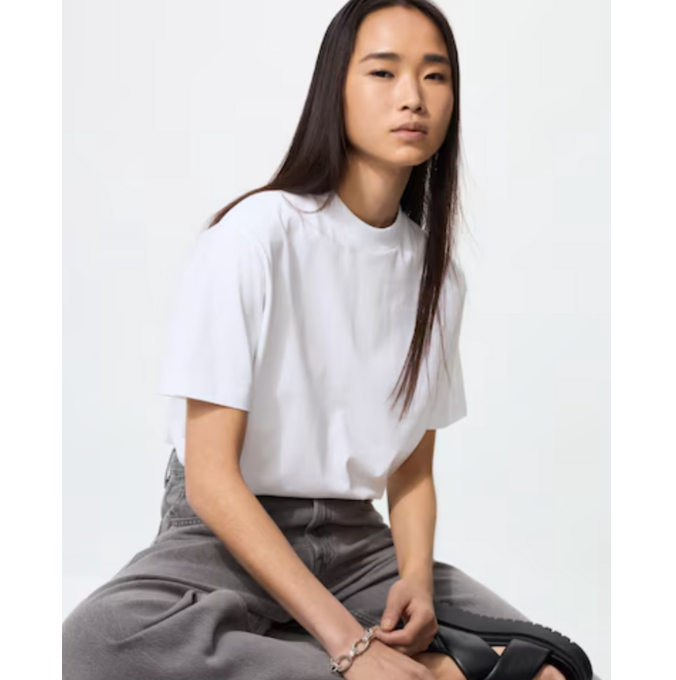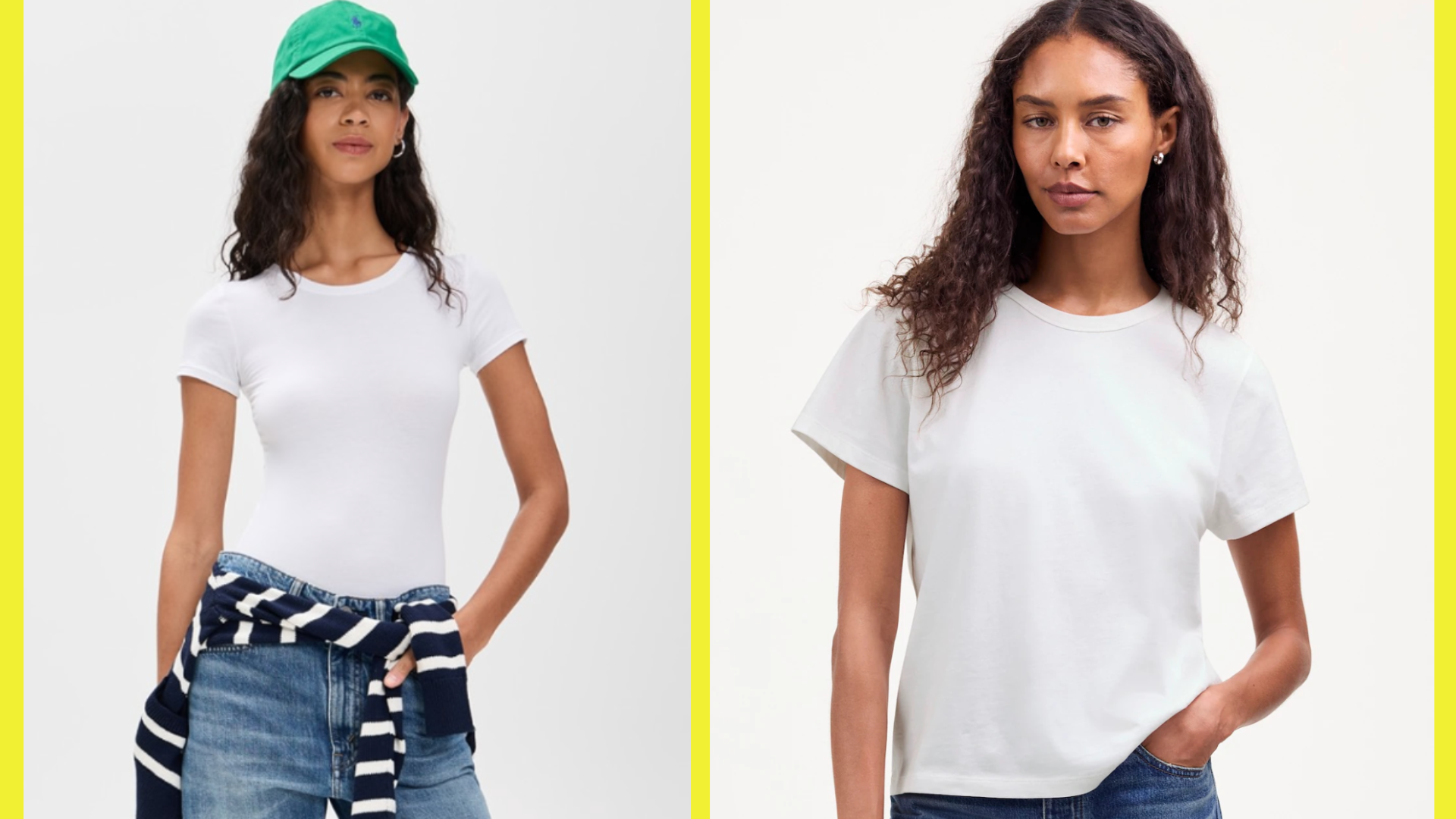

Before I was writing about fashion, I was designing it. I worked across sweaters, outerwear, and woven tops, but my bread and butter was cut-and-sew knits, and at the heart of that category sat the most deceptively simple piece: the white T-shirt. Years of perfecting those patterns taught me exactly what separates a tee you’ll reach for year after year from one you’ll end up tossing after a few washes.
Silhouette and proportion are the first things I consider when shopping for a T-shirt. Slim-fit cuts should trace your body without clinging, and boxier cuts need an angular structure that complements rather than fights your frame. Shoulder seam placement tells you everything about the intended fit. Classic fits use set-in sleeves with seams that hit exactly at your shoulder point, that bony ridge where arm meets torso. Relaxed fits intentionally drop the shoulder seam off this point, creating a looser armhole that won’t dig in during movement.
Neither approach is superior, but comfort matters. If tight armholes bother you, the dropped-shoulder construction of relaxed fits offers more freedom. If you prefer structure, classic set-in sleeves provide a cleaner silhouette that works better for layering.
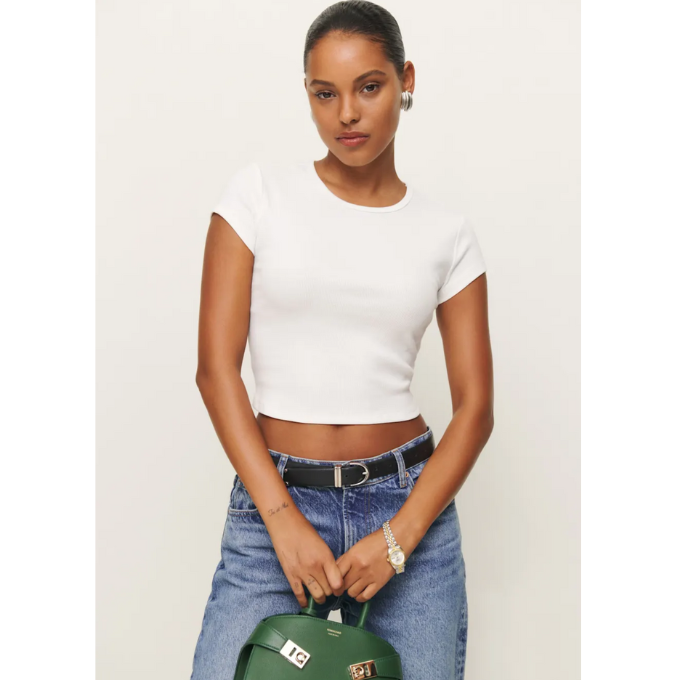
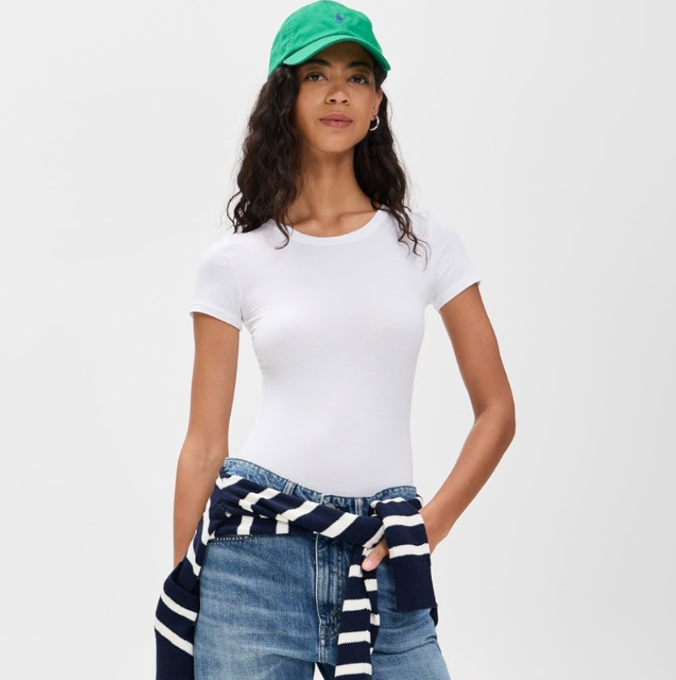
After silhouette, length is equally important. The last decade favored cropped cuts, but the Y2K revival has sparked a return to full-length tees, the kind that skim the hip and tuck cleanly into jeans without creating bulk. Cropped lengths will always have their place, whether that’s via a shrunken baby tee with a close-to-the-body fit or a deliberately boxy cut balanced by high-waisted denim.
Finishing details are where a white tee distinguishes itself. Look closely at the hem and neckline binding. Are they even? Is there puckering or twisting? Double-needle stitching along the hems not only extends the shirt’s lifespan but also keeps it lying flat after laundering. A well-made neckline should offer a decent amount of stretch and retention, so it snaps back after wear and laundering. This is especially crucial for crew necks, where the rib knit trim should be tight enough to sit flush against the neck but not so rigid that it feels constrictive.
Fabric density is non-negotiable when it comes to building the perfect tee. Sheer knits are ideal for summer layering and create beautiful drapes in oversized silhouettes. But for a versatile white T-shirt, the sweet spot sits between 160–180 GSM (grams per square meter), offering opacity for standalone wear without sacrificing that airy feel. White fabric is unforgiving and reveals every quality shortcut immediately. Heavy cotton feels stiff and traps heat, while genuinely cheap lightweight fabric goes limp after a few washes. Quality combed cotton or cotton-modal blends maintain both structure and softness over time, regardless of weight.
While a great white tee may seem simple, there’s a lot that goes into making this closet staple that people reach for again and again. It’s the sum of thoughtful pattern work, finishing, fabric choice, and proportion that becomes a wardrobe anchor for years. With all that said, I’m lending my expert eye to round up seven of the best white t-shirts on the market so you can find your perfect fit without the guesswork.
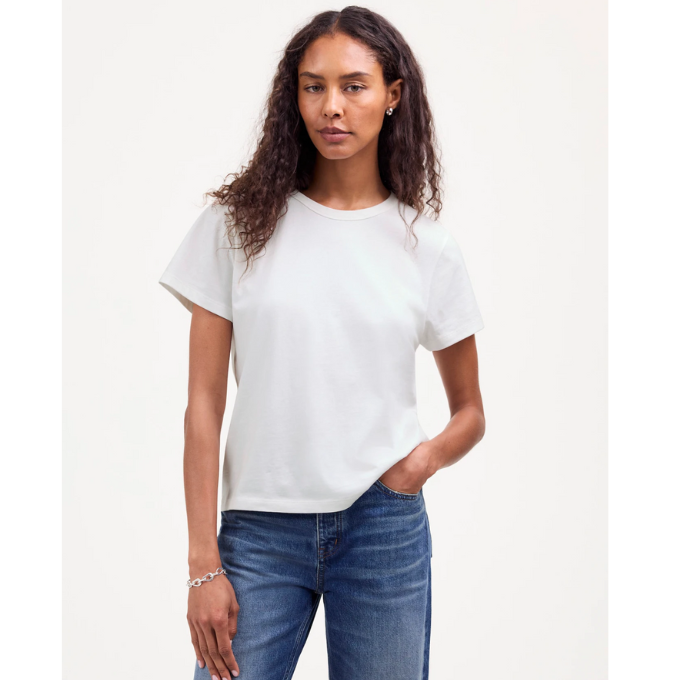
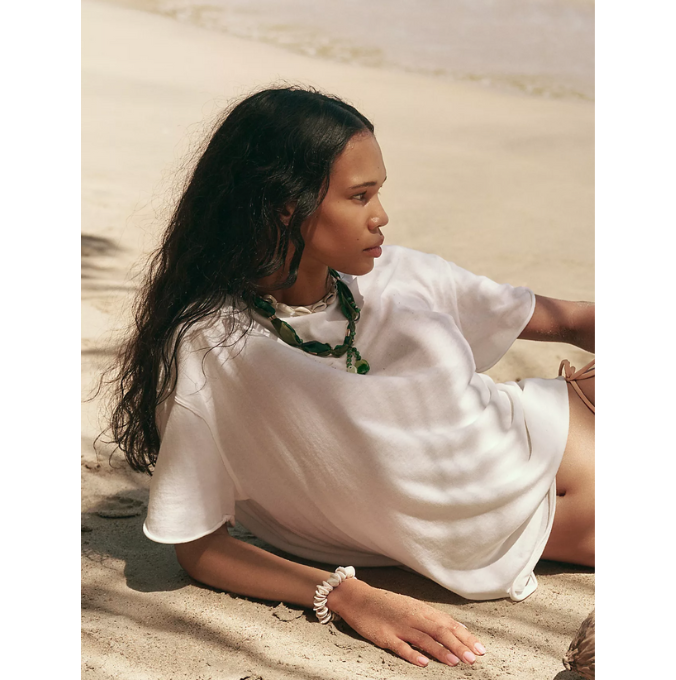
“Free People was always my go-to brand for aspirational tee designs as they execute oversized silhouettes and raw edge finishings effortlessly. It’s the perfect cool girl tee.”
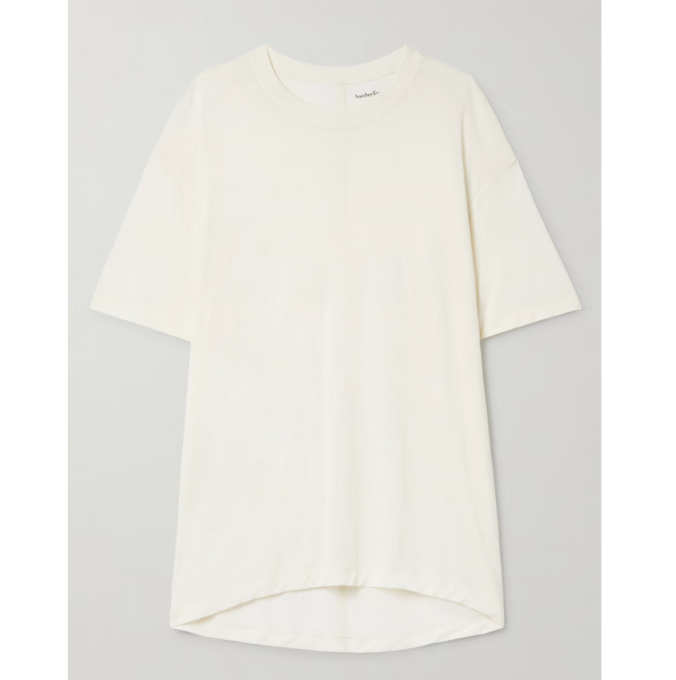
“The drape of Another Tomorrow’s Boy Lyocell-Jersey T-shirt evokes the fluidity of Greek sculpture, a masterclass in sheer fabric done right.”