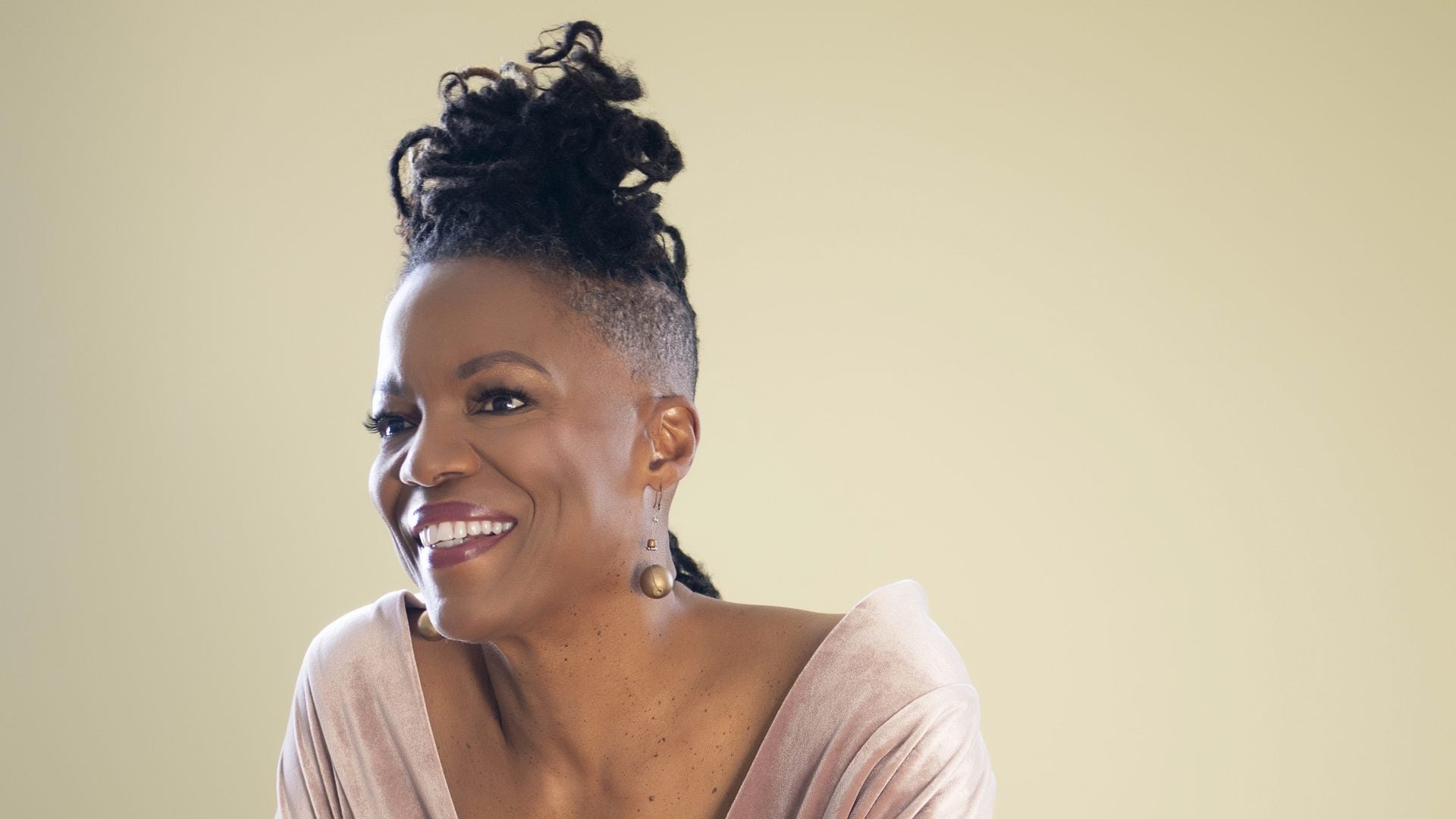

Grammy-nominated jazz singer Nnenna Freelon understands that the way we wear our hair is about more than style. “Hair represents so much of our sense of beauty and female ego,” the GRAMMY-nominated jazz vocalist explains.
Freelon grew up in a salon owned by her mom and aunt in Cambridge, Massachusetts. “It was a hub of beauty culture, and I grew up ear hustling. I listened to all the stories, but I had sense enough not to open my mouth. Because, if they caught you listening, they’d send you out.”
Freelon, the author of a new book, Beneath the Skin of Sorrow: Improvisations on Loss, watched as her mother ushered her clients through the varied transitions Black women face. “Before she picked up a straightening comb or anything, she would say, ‘I don’t just do hair. I do prayer.’ She would lay hands on you, pray for you, claim the victory, and then wash [it and proclaim] so it is,” Freelon says.
“She would accompany people on their hair journey, for the graduation, the funeral, the wedding. There were women who came in who had just been diagnosed with breast cancer and were fearful of losing their hair.”
These are our rites of passage because Freelon points out that our hair holds history. She believes one of the reasons many of us don’t like to cut our hair is because of the connection to when we weren’t allowed to care for it.
“But we snatched time from the hem of the day, though.,” she says. “We figured out ways to do it and, and that is a part of our very, very complicated history with our hair.”
Starting in 2019, the jazz artist endured a series of losses that made her question whether she would ever sing again. First, her beloved husband of four decades, Phil Freelon passed away. He was the architect that led the design team for the National Museum of African History and Culture, among many other notable projects. Then, six months later, her sister Debbie succumbed to lung cancer. In between, her dog, Basie, died one month after her husband.
That said, “grief does factor into the conversation about hair. Grief and hair are tied together,” she notes. Freelon recalls the moment she looked in the mirror during COVID-19 lockdown and realized the person staring back at her was a widow.
“Yeah, it’s more than a notion. And I remember thinking to myself, is this what a widow looks like?” she recalls. “I think I’m not the only woman who asks these hard questions to the mirror and then the mirror of the world.”
“I think it’s important to just put out there in terms of beauty and wellness, that we begin a practice of loving ourselves where we are without a mate,” she says. “We are not less beautiful, but we have to learn to love ourselves by ourselves. I had a 40-year marriage, and that’s my whole adult life framed in this. I had to figure out, who am I now? How do I function in this new reality?”
Her new book and album Beneath the Skin, “are both born from the same creative breath,” Freelon continues. “So, they came through me almost at the same time,” she adds about the projects that took about three years to complete. Along the way, she hosted a podcast called Great Grief as well.
The jazz singer had no idea that it would also be the skills she learned on the bandstand that would help her work through her grief journey. Instead of a book you need to read in one sitting, you can choose a meditation, a poem, a recipe, an improvisation, an essay, in one of the four sections. Within it a rainbow of emotions. It also brought back her passion for singing.
With the album, Beneath the Skin, we are encouraged to look beyond the surface. There is an incredible collection of songs on this album, but since we are talking about beauty, one standout is a tune called “Dark and Lovely.” She wrote it to acknowledge the beauty of her three granddaughters.
“I recognize that there are not that many tunes out there in the jazz world that celebrate our sun-stained little people,” she says. “You’ve got to get them when they’re young, before they decide that they’re not enough,” Freelon adds.
“Dark and Lovely,” she says, “is an ode to not only the chocolate sisters that my granddaughters are, but the little girl in all of us that never got acknowledged, that never got celebrated. You are dark skinned, gorgeous, and beautiful, just as you are.”
But even though she birthed a beautiful new musical project, Nnenna Freelon didn’t think she was going to sing again. “The music was such a joy to record. It was so freeing to write my own stories, to write as a jazz singer who’s been singing standards her entire career—to be able to write about my life, my grandchildren, the changes of growing older,” she says.
“This record, I’m hoping, is just a picture of a woman in her fullness—a woman who’s not apologizing, who’s happy to be who she is, where she is. She is even happy for the journey, even for the bumps and the bruises, and the difficulties.”