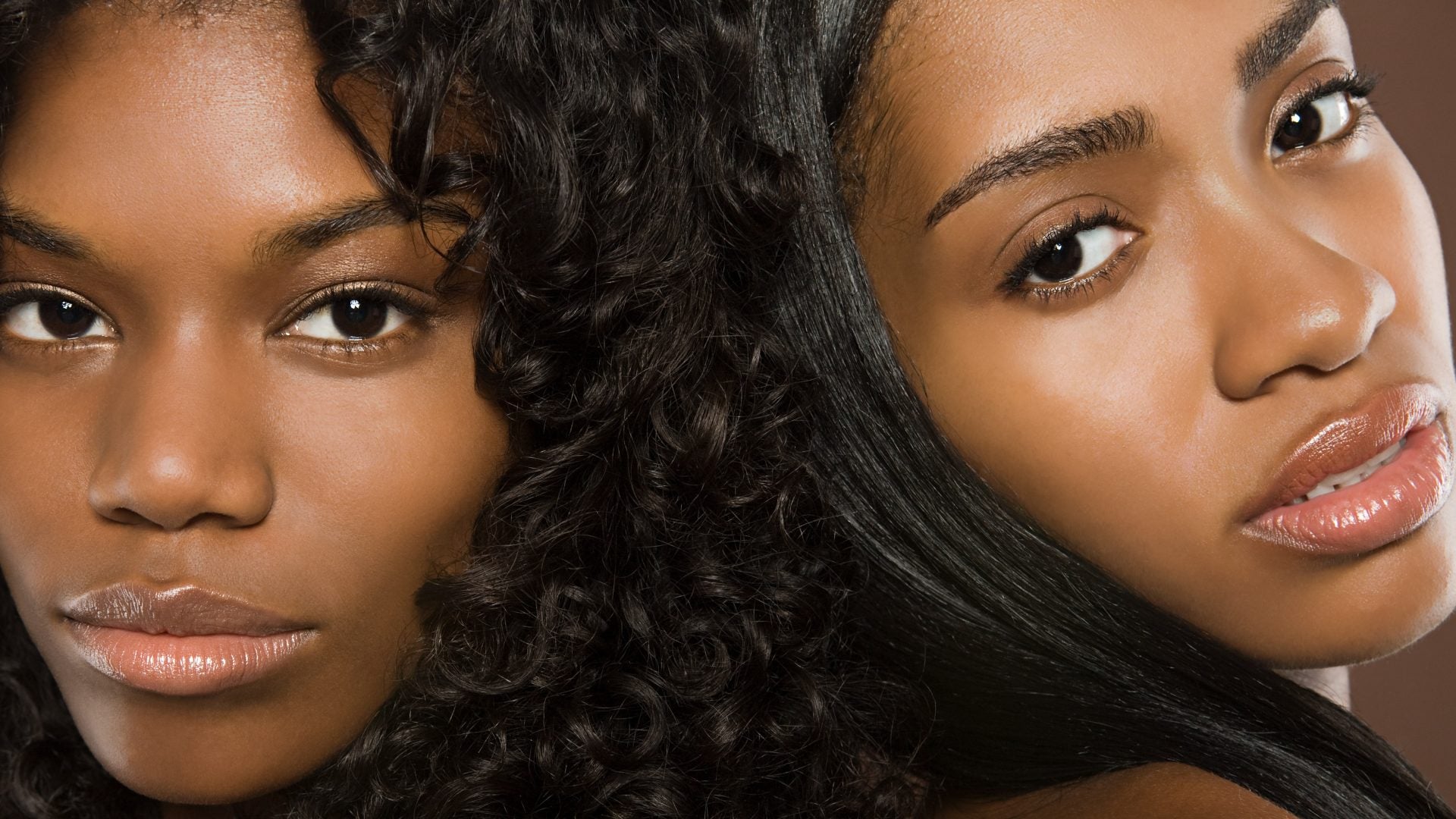

Japanese hair straightening, AKA “thermal reconditioning treatment,” videos have been popping up across my social media timelines, but what is it exactly? The end results look similar to a relaxer, but there are key differences in the process that sets it apart from a traditional relaxer. With the constant controversy surrounding hair relaxers, can this Japanese hair straightening method act as a viable replacement?
The debate around the pros and cons of relaxers is anything but new, and continues to grow with updated research about potential health risks. Some Black women prefer the maintenance that comes with relaxers as opposed to their natural hair, and we can’t deny that hair discrimination is still a reality in schools and workplaces. That said, it is no surprise why some would opt for straight hair as their most comfortable style. The way Black women choose to wear their hair should be an autonomous decision, but when relaxers can increase the probability of developing cancer or fibroids, the decision should not be taken lightly.
If the ultimate goal is managing and maintaining straight hair, then other options might be considered. Japanese hair straightening offers the same results, using a different method. First gaining traction in Japan, then London, it has traveled to the U.S. where a growing number of salons offer the treatment. Hadassa Felix is a hair stylist based in Miami, Florida, who has performed this form of straightening for the past eight years.
She first came into this method after training in a salon that offered it, “I noticed there are not too many people who look like me that do the service and do it for people who look like me as well.” She says a main reason clients of all hair types come to her is for lifestyle convenience. “[They] want to have a certain type of freedom but also make sure their hair is healthy in the process,” she says. “It’s been a game changer for my clients, especially Black women, because a lot of times people are intimidated by our hair. I don’t look at the curls. I look at the integrity and health of the hair, and I judge their hair based on that.” That said, like all hair processing methods, experience and proper application are key—and Japanese straightening should be done by a salon professional, not at home.
The main differences between the two methods are process, and a key ingredient: formaldehyde—which many hair relaxers are directly associated with. Formaldehyde can also be found in other chemical straightening options such as Brazilian blowouts or keratin treatments, but they are not in Japanese formulas.
The Japanese method also requires less preparation from the client. With relaxers, it is crucial to not wash your hair, wet or scratch your scalp, and reduce sweat for at least a week before your appointment. If any of those steps are done, it opens the pores on the scalp and subjects the client to chemical burns. Along with uncomfortable burning sensations, this can also lead to scabbing, and in severe cases, hair loss.
With Japanese straightening, the hairstylist washes the hair before adding the solution. The solution is left on for an allotted amount of time, washed out, and the hair is then blown out and straightened. From there, a neutralizer is added to the straightened hair to set the strands, rinsed out, and the final steps repeat. As Felix explains, “the solution opens the [hair] bonds, and the neutralizer closes them.”
Due to the repeated straightening in the process, this method does take longer to complete than relaxers, and therefore can cost more as well, with Felix quoting upwards of $400. For aftercare, the client must not do anything to the hair—no washing, working out, or using hair ties and headbands—for 48-72 hours to ensure the neutralizer sets.
It can also be performed on all hair types, including wavy and straight for those wanting a frizz-free finish. Unlike relaxed hair, hair can be color-treated as long as it is two weeks before or two weeks after treatment. Touch-ups can be stretched out between several months, as opposed to a relaxer’s timeline of six or so weeks.
Felix shares how it helps preserve hair health because minimal blow drying and straightening is needed when styling. She also notes that to achieve the “bone-straight” effect with relaxers, one often leans into overprocessing the hair which leads to damage. “You just have more freedom with Japanese hair straightening,” she concludes.
Although the Japanese straightening method does not use formaldehyde, it is not without its own risks. All processes utilize chemicals to permanently alter the bonds of your hair strands, and when chemicals such as these are involved, the risk for damage is always present. In a study conducted by the National Institute of Environmental Health Sciences (NIEHS), “chemicals within hair straighteners (such as parabens, bisphenol A, metals, and formaldehyde) could be contributing to the increased uterine cancer risk.”
Many Japanese straightening treatments do not include bisphenol A and formaldehyde, but do include ammonium thioglycolate which is a chemical that can cause significant skin irritation and damage scalp health. Additionally, the information regarding relaxer-specific health risks is more readily available due to research focuses.
In summation, Japanese hair straightening is another method of chemical straightening that omits formaldehyde, but like relaxers and keratin treatments, contains chemicals which can pose health risks, especially if not used properly. If one decides to use chemical straightening to maintain their hair, it is best to do your own personal research on the difference in processes and associated risks, and make the decision that fits best with your lifestyle and comfortability.