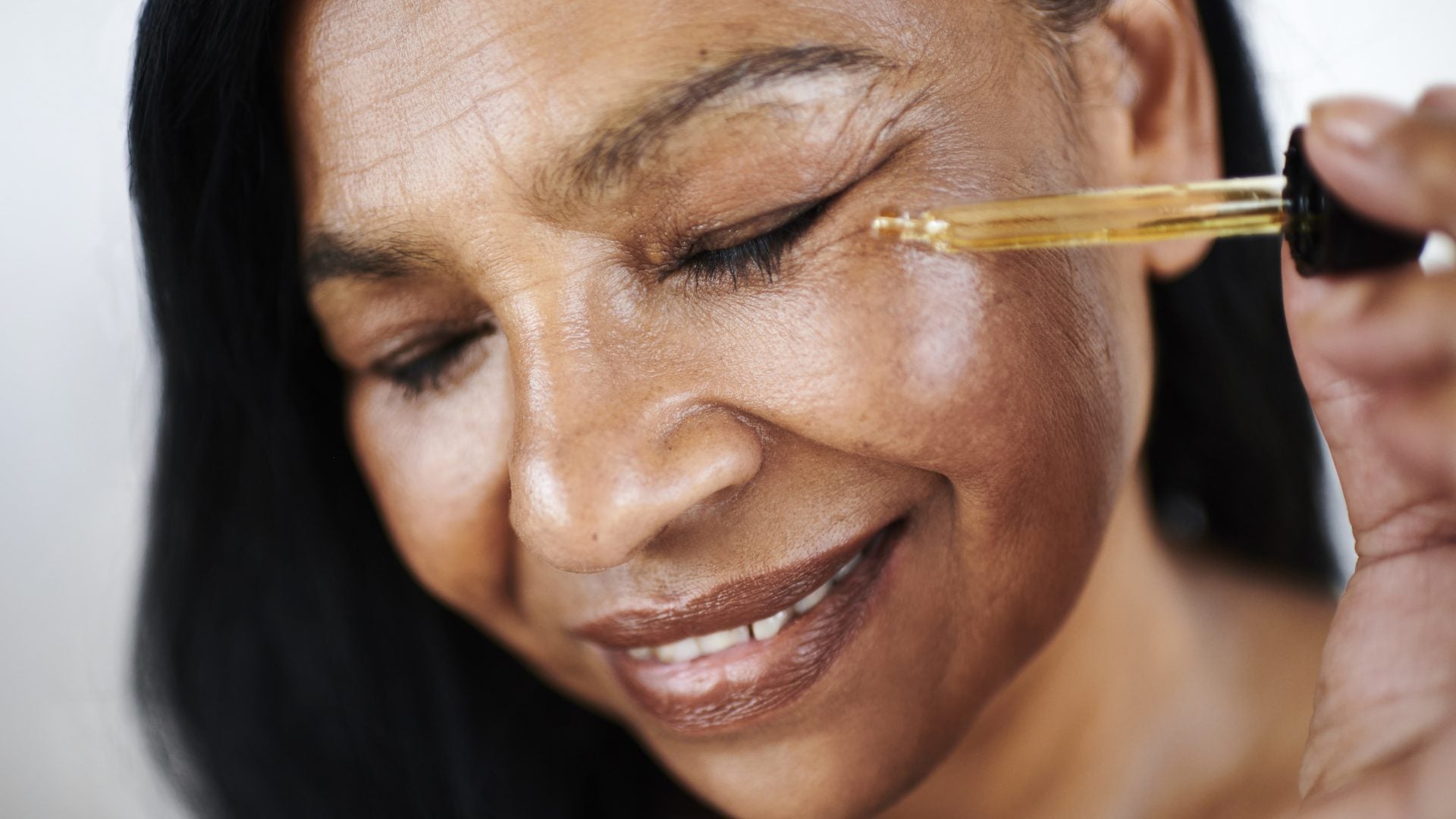

I don’t know about you, but I love a dewy moment as much as the next TikTok scroller. However, the viral takes on “skin flooding” and “glass skin” don’t always translate on melanin-rich complexions—especially when you add textured hairlines, humidity, and a tendency toward hyperpigmentation into the mix.
To get the info about this trend, I asked a panel of experts how to make these hydration-heavy routines work for us, not against us. The consensus: keep the glow, skip the irritation, and center barrier health first.
What Is “Skin Flooding” and “Glass Skin”?
Board-certified dermatologist Dr. Bradley Glodny calls skin flooding “a technique where you layer multiple lightweight hydrators—think essences, toners, serums—to deeply saturate the skin.” Glass skin, he notes, originated in Korean beauty and describes “skin that appears smooth, even-toned, luminous, and almost reflective.” The appeal right now, he says, is that we’re moving away from harsh routines toward ones that “nourish and moisturize,” giving plumper, healthier-looking skin without a side of redness. He also offers a reality check. “Glass skin isn’t literally attainable—filters can make it seem that way.”
Dermatologist Dr. Whitney Tolpinrud adds that both trends are “hydration-focused approaches that maximize moisture and radiance.” Skin flooding “floods” the skin before sealing with an emollient or occlusive; glass skin aims for a clear, light-reflective finish. The throughline is visible skin health—“people are prioritizing glow in place of heavy makeup.”
Why Deeper Complexions Need an Adapted Playbook
Darker skin has more melanin—and more risk of post-inflammatory hyperpigmentation when irritated. For that reason, Dr. Glodny reframes the goal: “Glass skin for deeper tones shouldn’t be about looking as fair as possible. Use language like clarity, evenness, and luminosity.” Practically, that means routines that prioritize barrier repair, hydration, and gentle exfoliation. “Avoiding irritation prevents PIH, one of the most difficult issues to combat in darker skin,” he says, adding that daily sun protection is “critical” to keep discoloration from worsening.
Hydration That Hits—Without the Heaviness
For Black skin, Dr. Glodny points to humectants and barrier-builders as the base: hyaluronic acid, glycerin, ceramides, and niacinamide “work synergistically to draw in water, lock in hydration, and strengthen the barrier,” helping keep pigment cells calm. He also likes soothing panthenol and aloe. Dr. Tolpinrud agrees and organizes hydration into humectants (pull in water), emollients (replenish lipids), and occlusives (seal it in), noting niacinamide’s bonus benefits for inflammation and PIH. Both dermatologists caution against high-percentage acids, harsh scrubs, strong fragrance, or drying alcohols: they’re common trigger points for irritation-driven dark marks.
Nurse practitioner Melanie Abeyta adds a texture check: for deeper complexions, the sweet spot is “natural, even luminosity rather than a mirror-like sheen,” achieved with lightweight hydrators that won’t overwhelm the skin. And Grace Oppong, RN, reminds us that traditional care matters, too—ceramides, shea butter, and occlusive practices (yes, the Vaseline you grew up with) are time-tested for dryness, but acne-prone skin should keep layers minimal and non-comedogenic.
Product Picks From the Pros
Dr. Glodny recommends Grimoire New York’s Vanity Monday Super Serum, which blends botanical humectants like sea buckthorn and barrier-supporting actives tested across all six Fitzpatrick skin types. Dr. Tolpinrud points to Curology’s Cream Moisturizer, which uses squalane and dimethicone to lock in hydration without clogging pores. Oppong highlights Image Skin + CO’s Luminous Vitamin C Serum paired with daily SPF 30+ to protect melanin-rich skin from hyperpigmentation. And for climates that demand lightweight hydration, Dr. Glodny and Dr. Dr. Tolpinrud both shout out Neutrogena’s Hydro Boost line as an accessible option for humid environments.
Abeyta also shared her product must-haves for hydration-forward routines. She likes Cleanlogic Dual-Texture Facial Buffers to gently cleanse and exfoliate the skin. For lips, she recommends the Exoceuticals Hydra Healing Lip Balm or the affordable grace & stella Berry Lip Mask. And for nighttime repair, she highlights MDSolarSciences Evening Retinol Serum to gently treat hyperpigmentation.
Hairline Texture, Ingrowns, and Dark Spots—Without the Buildup
Those of us who wear edge control, gels, or protective styles know the hairline is its own micro-climate. Dr. Tolpinrud suggests using “lightweight, non-comedogenic hydrators along the hairline” to prevent clogged follicles and trapped sweat. For ingrowns, both she and Dr. Glodny like lactic or mandelic acid as gentle options for deeper tones, with an eye on frequency to avoid over-exfoliation. When fading hyperpigmentation, Dr. Glodny layers “hydrating brighteners like azelaic acid, vitamin C, or plant-based extracts,” and he recommends the “sandwich technique.” In other words: hydrate first, add actives, then cushion with barrier support so skin stays calm while the brighteners do their job.
Climate Matters: Humid Summers, Dry Winters, and Everywhere In Between
Hydration isn’t a one-size-fits-all because environments aren’t either. “In humid climates, lighter layers are enough—over-layering can feel sticky or cause congestion,” Dr. Glodny says. Dr. Tolpinrud agrees: choose breathable gels and serums; in hot weather, thick occlusives plus sweat can spell breakouts. Abeyta adds that tropical conditions call for balancing hydration with oil control to avoid greasiness. In dry or high-altitude air, flip the script—“strategic full layering” keeps water from evaporating, says Dr. Tolpinrud. Oppong suggests doing any heavier occlusion at night and being mindful of heat so you don’t literally perspire your routine off.
Acne-Prone or Sensitive?
“Less is more,” Dr. Tolpinrud says simply. Introduce one hydrating product at a time and stick to fragrance-free, non-comedogenic formulas. Heavy occlusives can trap debris and worsen breakouts; keep textures light, focus on humectants like glycerin or hyaluronic acid, and always, always add a broad-spectrum sunscreen. Oppong echoes the caution: if you’re breakout-prone, excessive layering can backfire—trim the steps, avoid pore-cloggers, and remove known irritants.
Reclaiming the Trends
Doing skin flooding and glass skin “our way” means honoring how melanin shows light and holds moisture—without chasing an airbrushed ideal. “It’s about adapting trends to celebrate the unique strengths of darker skin tones,” Dr. Glodny says, shifting the conversation from translucency to radiance. Dr. Tolpinrud sees it as making routines more inclusive and self-defined: even tone, smooth texture, comfortable hydration. Oppong connects it to legacy—physical exfoliation and rich moisturization are longstanding rituals in Black communities, and pairing those traditions with daily SPF bridges the gap between glow and protection. Abeyta’s take is the perfect edit note: “We’re not copying a look designed for lighter complexions—we’re tailoring healthy, radiant results to the realities of Black skin.”
The Bottom Line
Skin flooding and glass skin can absolutely work on melanin-rich complexions when you reframe the goal—clarity, evenness, and hydrated bounce—then build a routine that protects your barrier, respects your hairline, and flexes with your climate. Keep layers lightweight, choose ingredients that soothe and strengthen, reach for gentle acids when needed, and protect the progress with SPF.