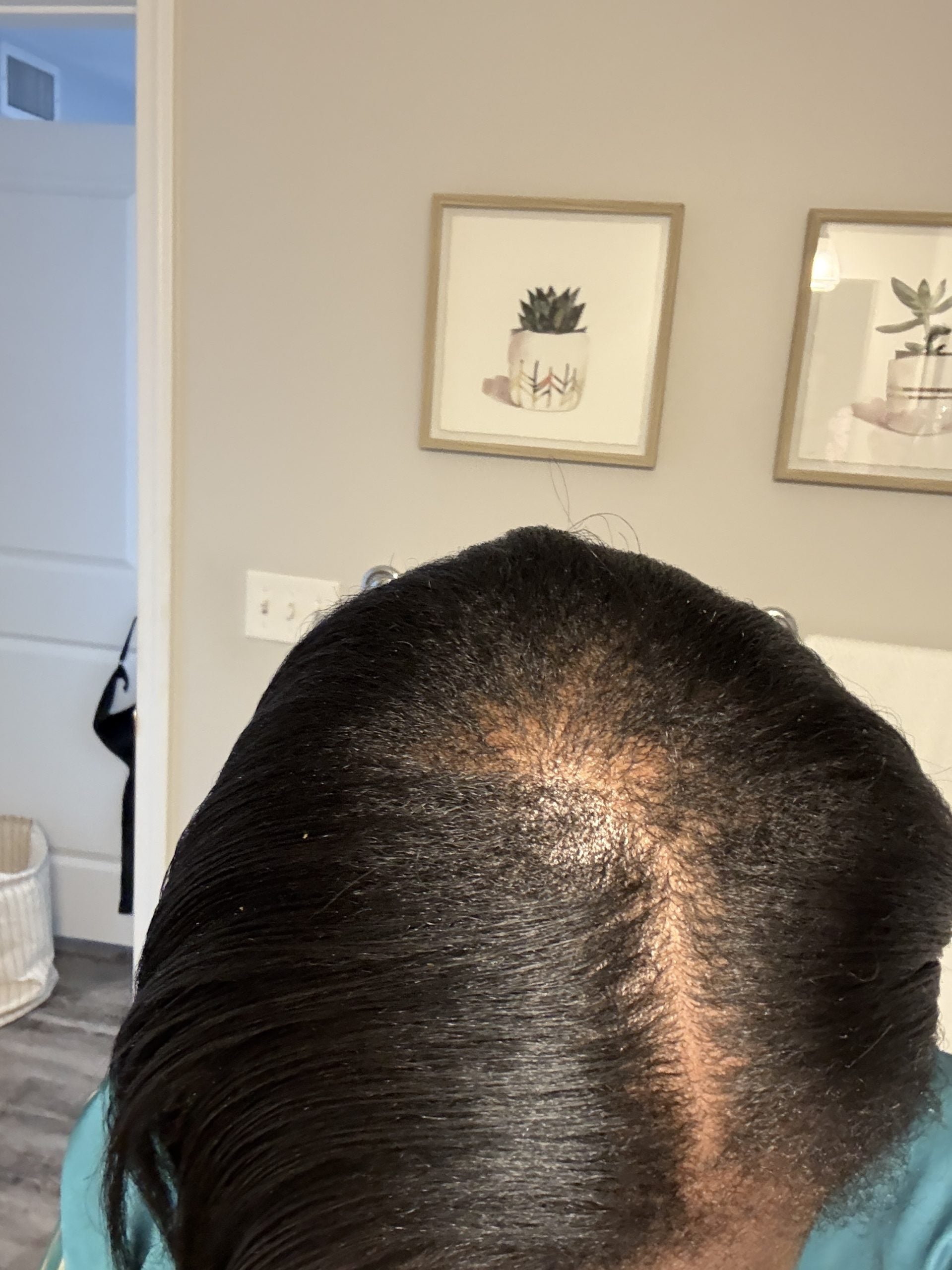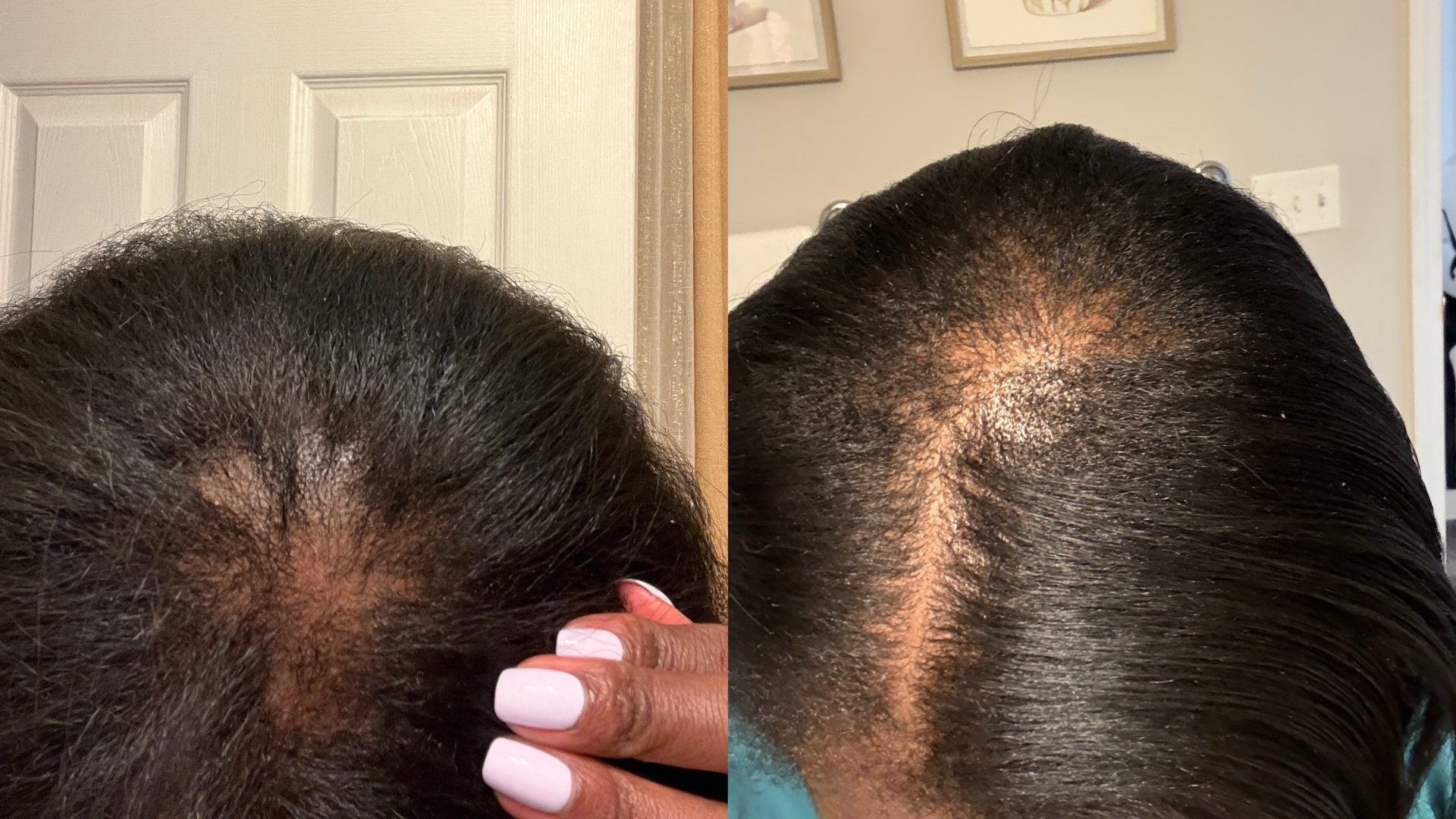

I discovered I was experiencing hair thinning in the most unexpected (and sort of embarrassing) way. During a visit home to see my folks, I bent down to grab a piece of mail my mom dropped. I heard her gasp behind me in a sharp and panicked tone: “Oh my god, your hair!” Confused, I handed her my phone and asked her to show me what she saw. The photo stopped me cold.
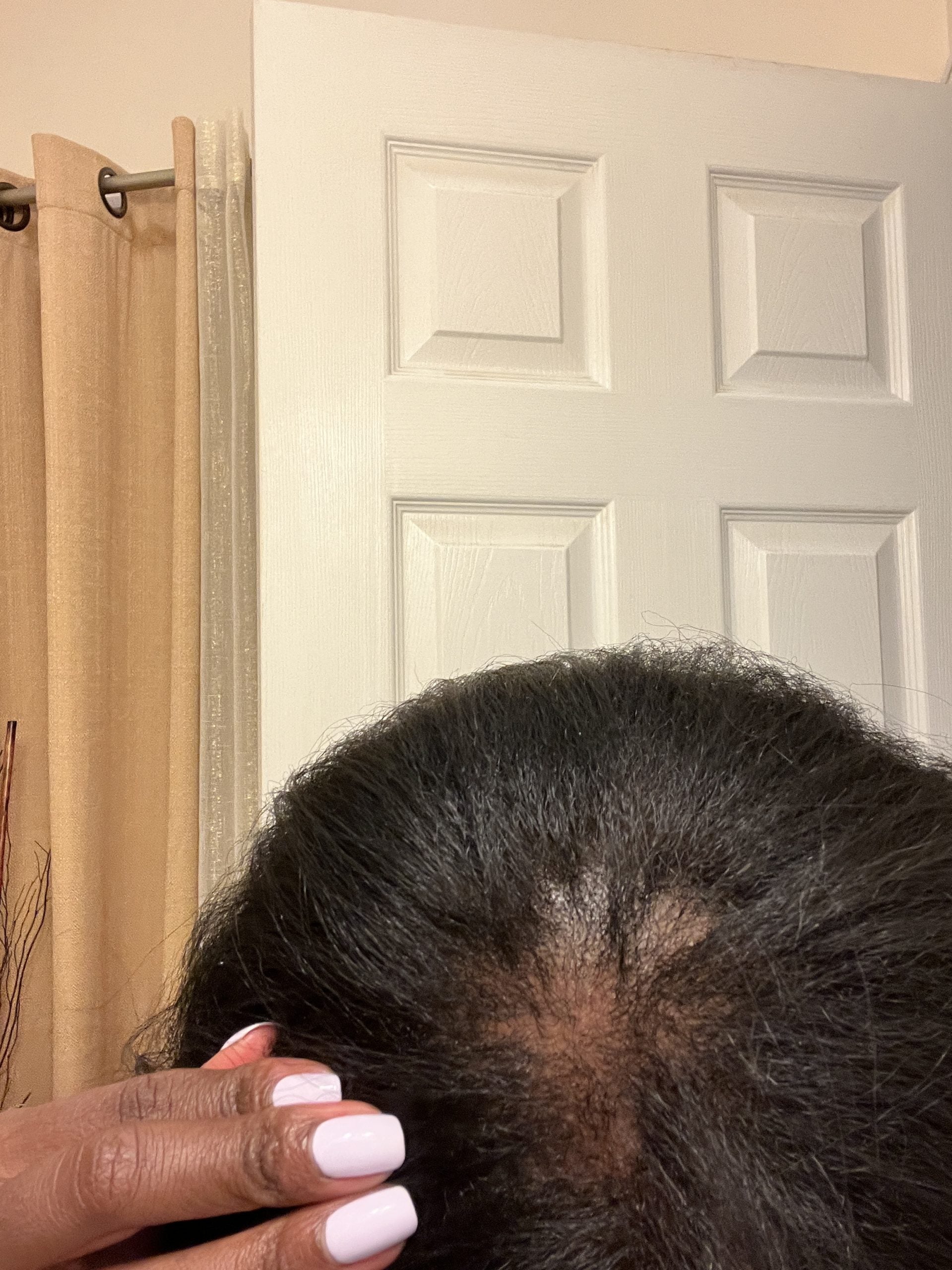
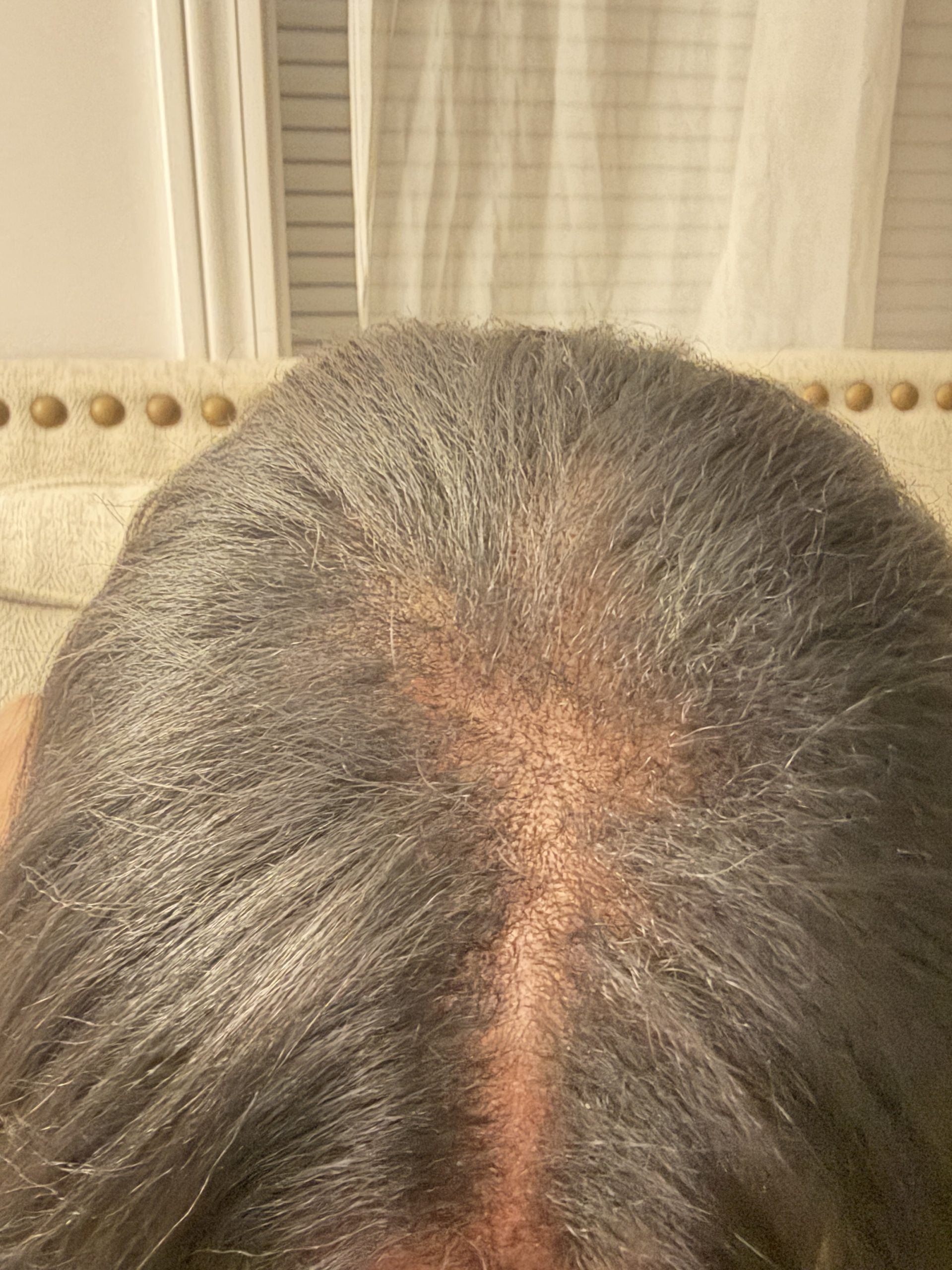
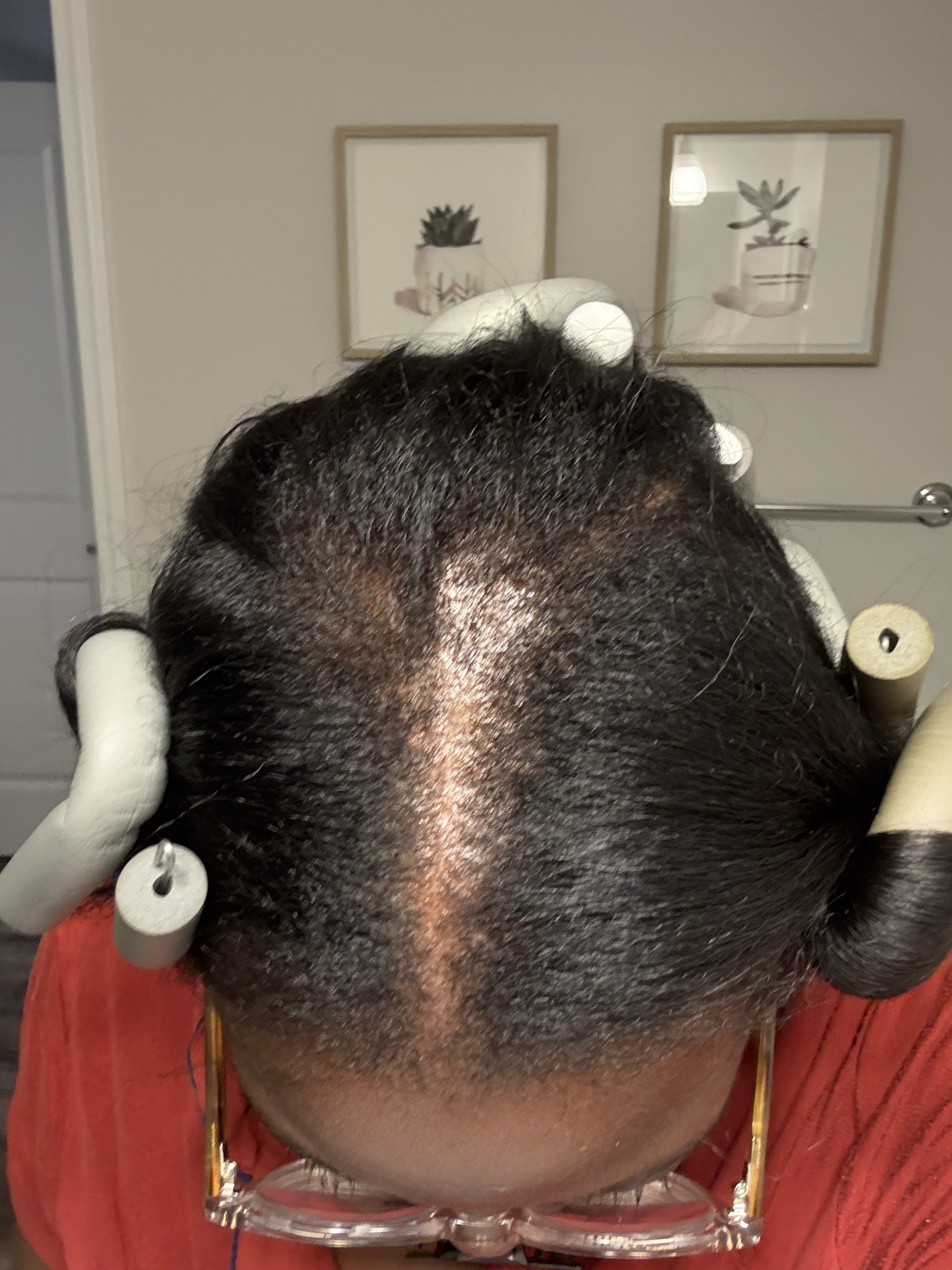
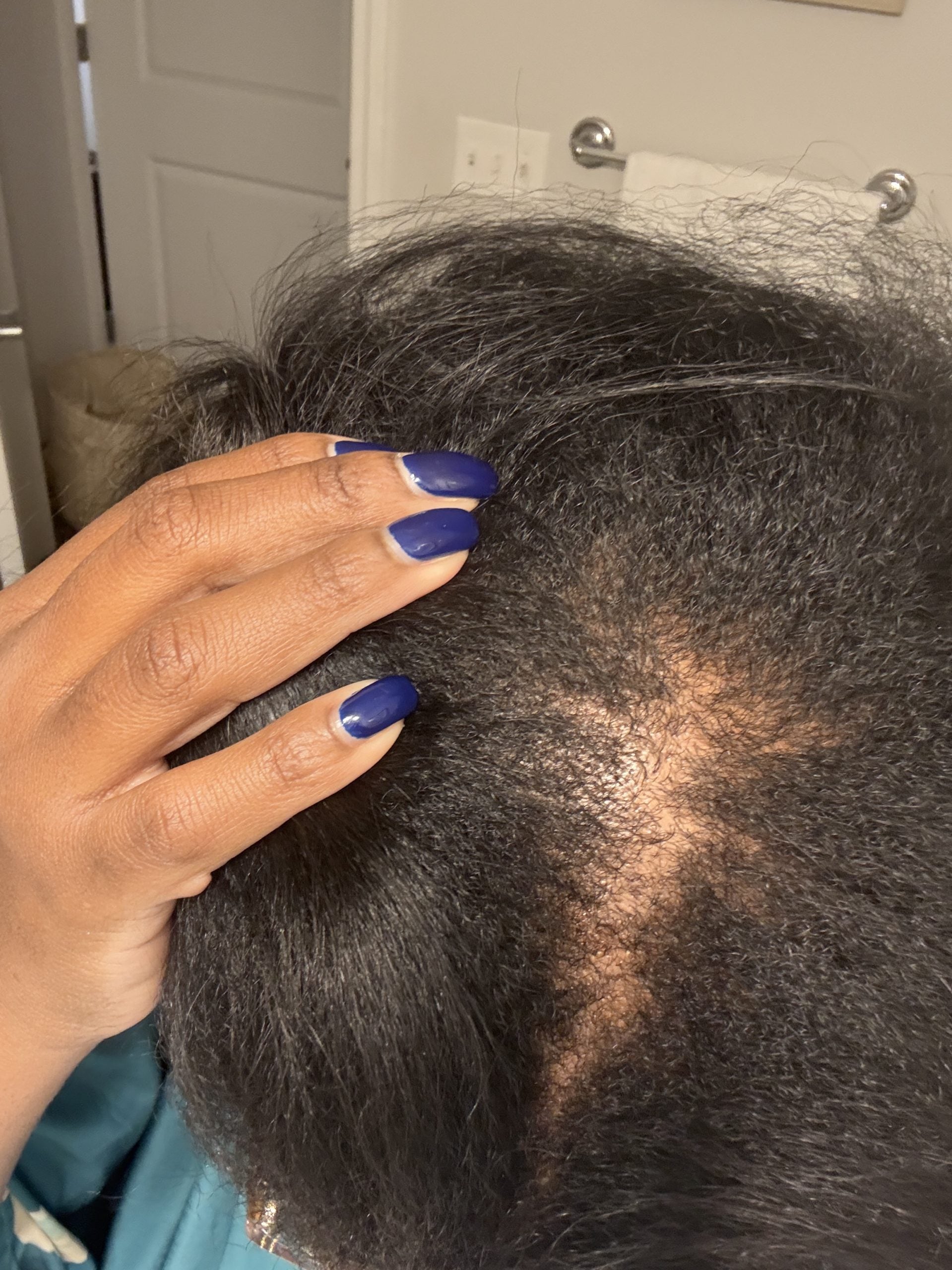
Staring back at me was a glaring patch of scalp at the crown of my head — a bald spot I had no idea existed, along with a widening part. A feeling of dread washed over me. How long had this been there? How many people had noticed before I did? The shock was instant, but the worry that followed was worse. My body was changing without my permission, and I was the last to know.
Truth be told, I’ve never had a full, thick head of hair. Certain styles, like a sleek bun or super defined twist outs, never quite hit the same on my 4B super fine hair, and I’ve always been sensitive about it. That sensitivity intensified when I realized that my hair was falling out and I had no idea why or when it started. I couldn’t resist the urge to hit up Google for answers, trying to piece together a reason for this sudden and severe bout of hair loss. Finally, I decided the best thing was to quit guessing and reach out to my dermatologist to get to the root of it.
On my first visit, I had a diagnosis: telogen effluvium. This is a condition where, due to stress or hormonal changes, the body puts the hair follicles into a resting phase. Most people shed 50 to 100 hair strands a day. But when the body experiences a shock (think illness, surgery, rapid weight loss, or intense emotional stress) it can cause even more hair thinning all at once. As my doctor explained it, the body puts non-essential functions like hair growth on the back burner while dealing with a crisis elsewhere in the body. I was able to link my stress back to earlier in the year when I almost lost my stepfather to a heart attack. Once my diagnosis was explained, it made sense why the hair loss wasn’t caught until months later. Luckily, this condition is temporary and regrowth is usually seen within nine months.
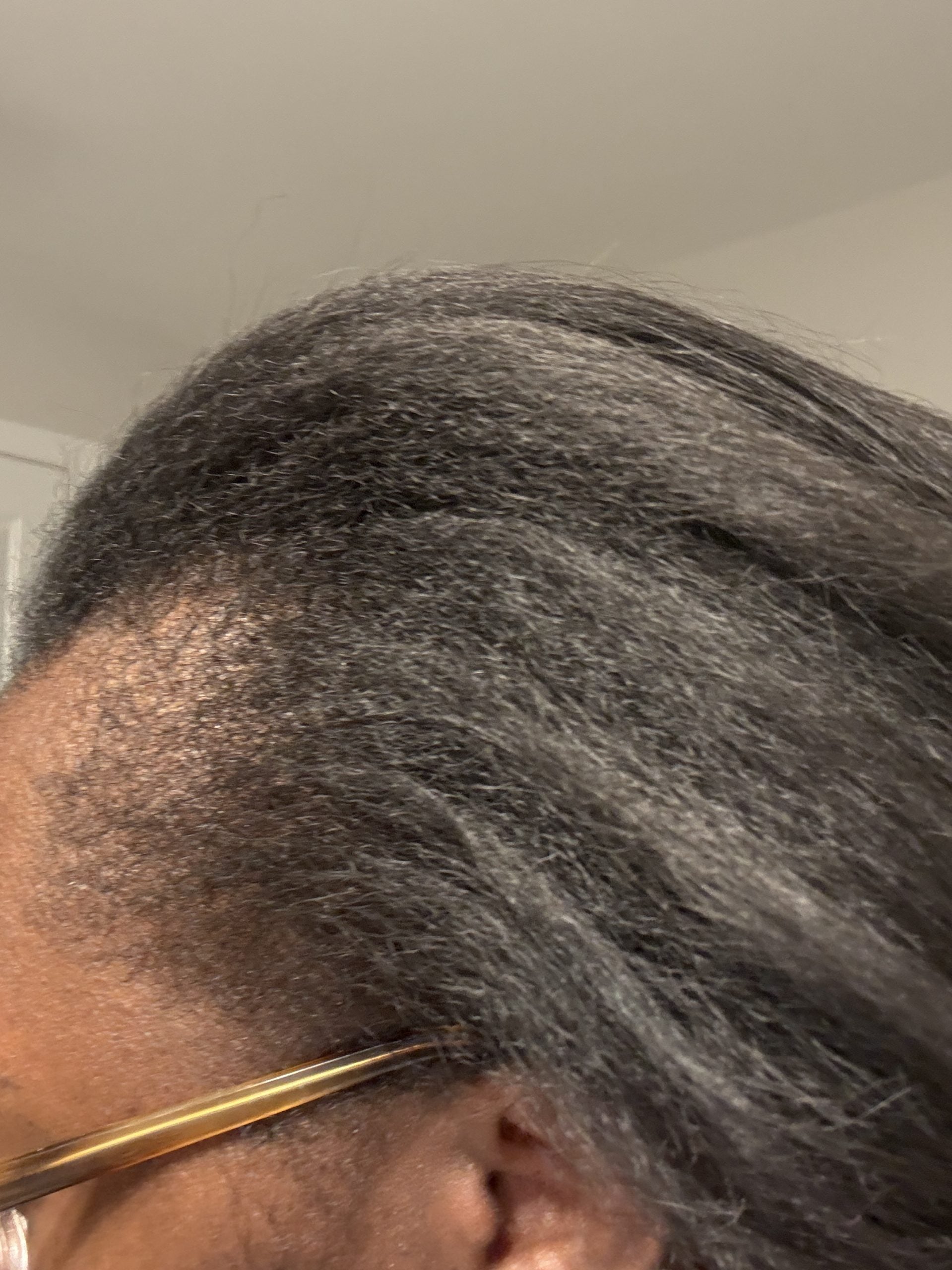
However, I wasn’t out of the woods just yet. My derm and I also discussed some hair thinning near the corners of my hairline that she suspected was caused by a mild case of androgenetic alopecia, or simply put, female pattern baldness. She says this is typical of women in their mid-to-late ‘30s.
My derm immediately prescribed me medicated hair drops containing minoxidil and finasteride to combat the root causes of my hair thinning, warning that it would be at least three months before I saw even the faintest sign of results. With my stubborn type A personality, I did my own research to figure out how I could help speed up those results through diet, product swaps, hairstyle changes, and supplements. Through trial and error, I found the perfect products and routines to add to my regrowth toolkit. 10 months post-diagnosis, I’ve seen impressive results.
Here’s what worked, and what didn’t.
Regrowth From The Inside Out
It may sound cliché, but we are what we eat. Growing up, myself and the women in my family often believed that hair growth was a reflection of the products we used. My mom swore up and down that greasing our scalps would lead to lengthy strands (no shade to mama, but I’m glad we now all know better).
I also learned from researching and speaking to licensed hair professionals that our hair is largely a reflection of what we feed our bodies. In order to give my body the fuel it needed to grow the healthy head of hair I was striving for, I had to reclaim my plate. Instead of cruising through each morning with nothing but a cup of coffee and vibes, I started making it a point to have a balanced breakfast that emphasized whole foods. This would sometimes look like a couple of scrambled eggs with avocado toast and turkey bacon, steel cut oatmeal with banana and chia seeds, or if I was running short on time, a greek yogurt loaded with mixed berries.
I also made it a point to incorporate green leafy vegetables in my meals to help boost my iron levels. Hair relies on a steady supply of nutrients to grow strong and stay anchored, and while I am faithful to my daily women’s multivitamin, one tiny tablet can’t supply my body with all that it needs to regrow all the hair I’ve lost.
Because my dermatologist warned me that minoxidil results typically only last for as long as you use it, I wanted to give my body more of a fighting chance to retain my results long after I stop taking it. My trick was to look at the ingredients of popular hair supplements and introduce foods that contained high amounts of those vitamins (biotin, B-vitamins, omega 3 fatty acids, iron, etc). I wanted to give my body the purest forms of those vitamins through actual food sources so that it could sustain the growth journey I was on.
Vitamin Me, Please!
And speaking of supplements, there are tons of vitamin brands on the market addressing the demand for thicker, longer hair. Some are marketed to postpartum moms experiencing prolonged thinning. Others claim to give you the 3-in-1 combo of glowing hair, skin and nails. While everyone’s reason for seeking hair-stimulating vitamins will be different, I can definitely say that biotin supplements were an epic flop for me. I tried several from different brands, both in tablet and gummy form, and didn’t notice any real difference.
After speaking to my dermatologist, though, it made sense why. Biotin only helps if the hair loss is directly tied to a true biotin deficiency, which is actually very uncommon. Since my underlying cause was stress related, the remedy I needed was time, recovery, and overall nutritional support.
What I did find extremely helpful is taking supplements that had a more balanced mix of hair-healthy ingredients like the Mary Ruth’s Liposomal Hair Growth Max liquid vitamin that contain not just biotin but B, D, and E vitamins, folate, and more. While I can’t prove that this supplement is helping me achieve thicker hair as the brand promises, I am noticing more rapid body hair growth specifically on my legs and under arms (an undesirable side effect of any hair stimulating routine although a sign that something is working!)
Styling For The Long Haul
While on this long, arduous journey to regrow my hair, I’ve had to be very careful not to wear tight, tugging styles that could in any way put stress on my follicles. For the last few months, I’ve had to avoid my favorite looks. Yes, you guessed it: cornrows, sew-ins, tight ponytails, and especially those vacation-friendly box braids.
As someone who works out regularly, travels often, and does not enjoy doing my own hair, it’s been a real challenge looking for hairstyles that deliver convenience and the look I desire. I know the fine hair girlies are tired of hearing this, but low manipulation is truly the way to go if you want to retain length, limit breakage, and watch your hair flourish. So while my hair is most in need of TLC, I’ve been relying on gentler styles like loose ponytails using a scrunchy, wash n’ go’s, and silk presses using as little heat as possible. I also switch up my part each week to give my weak patches a break, and visit my hairstylist at once a month for a routine hydration treatment and trim if needed.
Between visits, I’m religious about washing my hair at least once a week, but ideally more. That’s because a clean, healthy scalp is the optimal environment for hair growth to happen. These days, I’ve been incorporating the Nioxin System 2 shampoo and condition into my wash days (a lucky T.J. Maxx find!) which combats thinning and shedding. A bonus is that it contains peppermint oil, leaving a tingling, refreshing sensation on my scalp that feels like the ultimate self-care treat. For a post-wash treatment, I’ve got to give props to Cécred’s Reconstructing Treatment Mask for adding reinforcement to my strands. Once I’ve rinsed and towel-dried my hair, I show my scalp some love with the cult-classic Cécred Restoring Hair & Edge drops, which I then applied to my bald spot and edges each morning. I’ve seen far less hair making its way down the shower drain since getting this routine down to a science.
Saying Goodbye To Stress
One of the biggest lessons I learned through this process is that hair doesn’t thrive in chaos — and neither do I. Stress is a major trigger for telogen effluvium, so I’ve made it a non-negotiable to protect my peace. Before spiraling over something, I pause and ask myself: Is this within my control? If the answer is no, I let it go. I’ve also set a timer on my phone every two hours for a quick 10-minute walk to soak up some sunlight (a mood-boosting cheat code!) And whenever I can, I carve out moments that bring joy back into my body: meditation when I need grounding, dinner with friends when I crave connection, and anything that makes me laugh out loud. For my specific condition, healing hair loss isn’t just physical—it’s emotional, too.
To Sum It Up
I can’t emphasize this enough: my hair loss diagnosis is just one of the many reasons Black women could experience hair thinning at any moment in their life. Other common causes include traction alopecia (hair loss caused by continuous pulling on the follicles from tight hairstyles), Central Centrifugal Cicatricial Alopecia (known as CCCA), fungal infections, or it could be genetic pattern baldness that I mentioned earlier. Because I live alone, I wouldn’t have noticed the hair thinning at the crown of my head had someone else not pointed it out. If you visit a stylist regularly, I’d ask them about your overall hair health and density, especially if you believe you’re genetically predisposed to hair loss. If you’re already noticing signs of hair loss, bald spots, thinning edges, or brittle strands, it’s important to see a dermatologist as soon as possible so a cause can be determined and treatment can be prescribed right away. Remember: with hair loss, time is of the essence. The sooner it’s caught, the better the response to treatment will be.
Next (and I know it’s easier said than done), don’t be embarrassed. Hair loss is more common than you think, and though it’s hard at first to accept, it is not the end of the world. Modern medicine has come a long way, and there are tons of treatments available to stop, slow down, or reverse its progression from medications and injections all the way to hair transplants. I’ve even found a root cover up spray to hide my bald patches when I’m feeling a little self conscious—and it’s a God send! If you’re looking for a look that will hide your thinning areas, chat with your beautician to see what low-manipulation styles they recommend, and ask how you can best maintain your hair between visits.
Last but not least, patience is key! Hair only grows about half an inch per month on average. It will take time to see results if you are dealing with an underlying condition that’s causing the hair loss to begin with. Be kind to yourself along the way, and resist the urge to check the mirror every day expecting to look different…because you won’t. The regrowth process after hair thinning will be slow. With as much progress as I’ve made, my bald spot is not all the way filled in. However, I’m committed to doing my homework and taking care of my mind, body, and soul along the way.