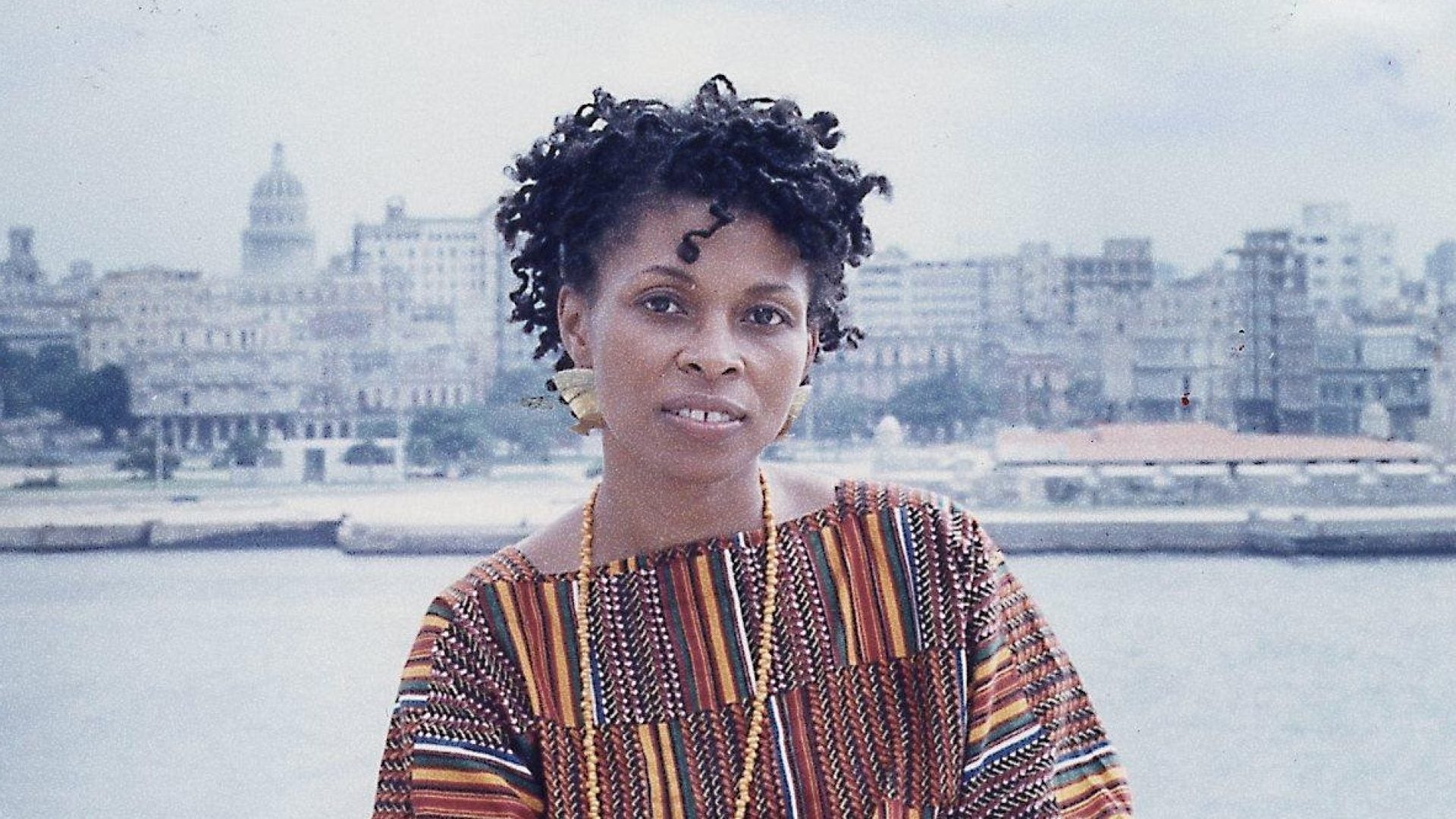

Assata Shakur (born Joanne Chesimard) the political activist, revolutionary writer, Black Panther, and member of the Black Liberation Army has passed away in Havana, Cuba at the age of 78. She transitioned from this earth as a woman free from the jurisdiction of the United States, having lived the rest of her days as a political refugee in Cuba after escaping the tyranny of the American government and COINTELPRO in 1979. Shakur is survived by a legacy of revolutionary thought which urges us to reflect on the lessons of power, beauty, and preservation that can be found through her physical representation.

When thinking of Assata Shakur there are two images that most often come to mind: a poster created in protest against the U.S. government boldly stating: “Assata Shakur is Welcome Here,” which depicts a young Assata proudly wearing her afro and hoop earrings, and, photos of her later in life with long, often adorned locs. Shakur’s political work garnered her attention in the 1960s and ‘70s, and thus catapulted her onto a larger stage. Appearing on many occasions in layered mixed jewelry, long locs accessorized with cowrie shells, or a shapely afro in her earlier life, Shakur represented an eclectic, personalized form of Afrocentric style.
Like other political leaders from Pan-African and Black liberation movements, Shakur’s likeness was adopted for both political iconography and government-backed harassment campaigns alike. She became a source of beauty inspiration for like-minded Black Americans wanting to embrace their natural state, and a dissident to the oppressive class who took offense at the mere visual representation of Black freedom.
Still, Shakur became an image of hope and radical love. More than a political ideologist, she put true action behind her words, notably stating, “Our desire to be free has got to manifest itself in everything we are and do.” She believed in engaging in political struggle for total liberation, and in that, she was steadfast in her belief of the sanctity of life. “Part of being a revolutionary is creating a vision that is more humane. That is more fun, too, that is more loving. It’s really working to create something beautiful.”
The beauty she created through her actions and words taught us that through the fight for freedom against state-sanctioned violence, there is always opportunity for new, beautiful realities.
Her final act of resistance on U.S. soil—escaping incarceration, living on her own terms, and taking autonomy into her own hands—taught us the power of self-preservation amidst the struggle, a theme she carried through to her last days, as the global community does not have imagery of her final form. After decades of her likeness being used as a symbol of violence and hope, protecting her image through her own privacy and autonomy is what she and many of our political elders deserved. Shakur being remembered as a pillar of morality, beauty, and justice that was still, at the end of the day, human with her own emotions, and beauty routines, makes her impact everlastingly powerful.
Her words ring out in our minds and hearts, and her image as preserved will forever live on. See below for more images of one of the greatest figures in our lifetimes, who exemplified the beauty and love in liberation.