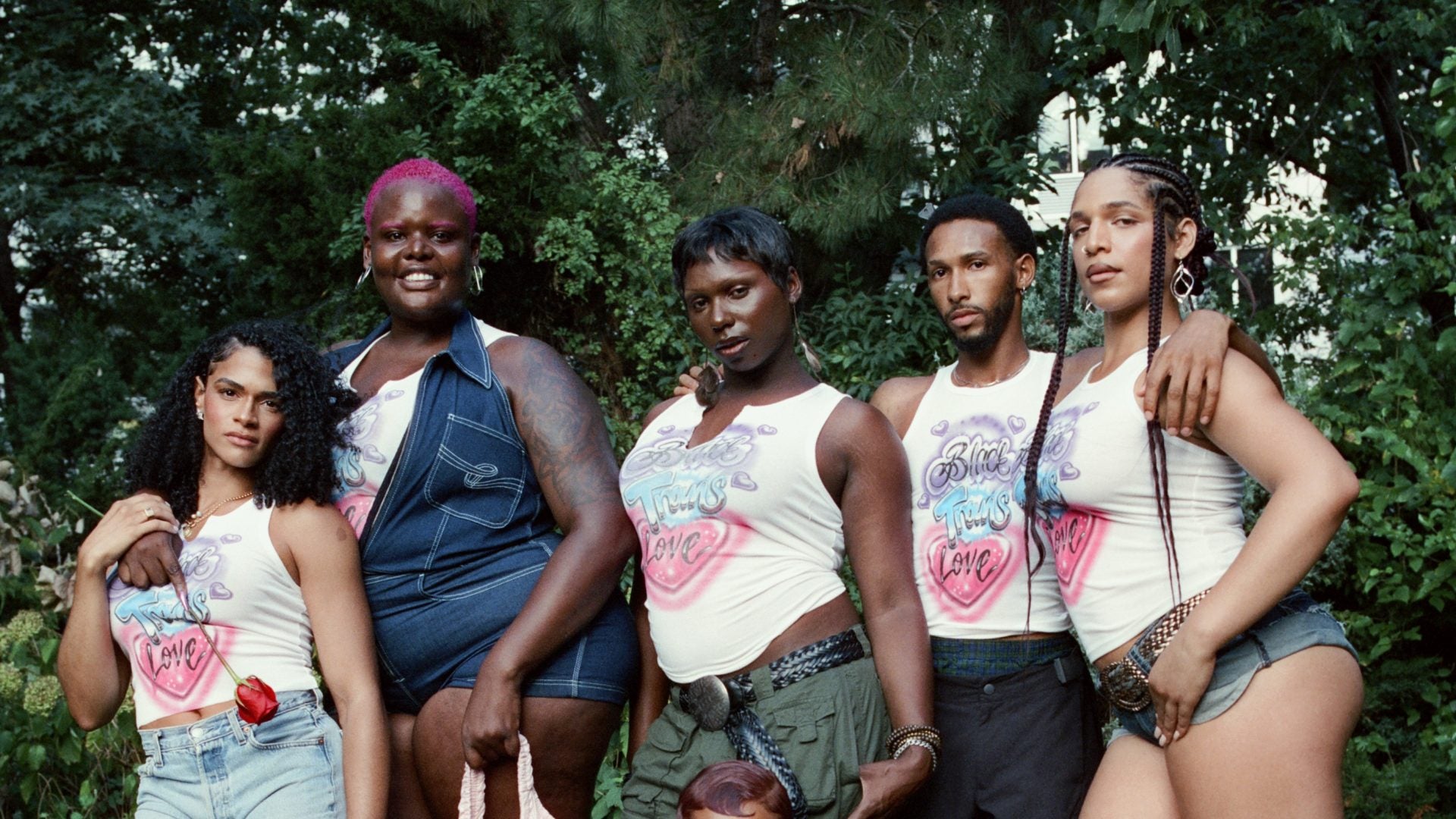

“So then I would get to sit through the Angelito offering and they would make us stand, they would have a prayer session,” Sol Angel recalled, thinking back to her childhood in the Dominican Republic. That sense of ritual, of being seen and cared for in a small but meaningful way, shapes the work she now pours into the Angelito Collective.
Late August at Socrates Sculpture Park, the annual Celebration of Black Trans Women Cookout unfurled once again, this year coinciding with the birthday of Marsha P. Johnson. A large banner bearing Johnson’s name hung prominently near a shrine honoring her legacy, a quiet but potent reminder of the resilience and vulnerability of trans lives.
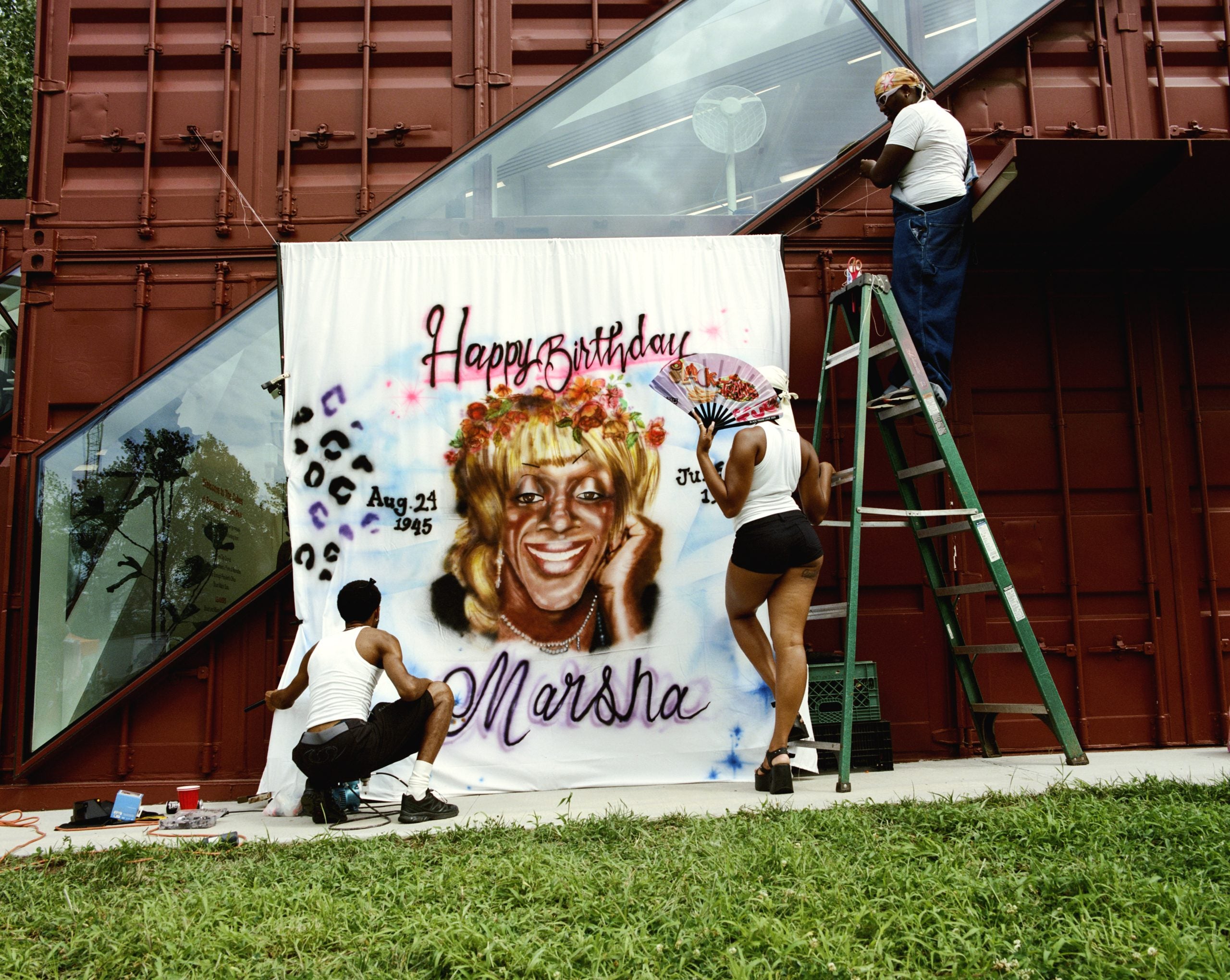
Johnson’s legacy feels particularly urgent as the National Park Service recently removed all references to transgender people from its New York Stonewall National Monument website, erasing the central role trans women of color played in the 1969 riots. Organizers have labelled the move a blatant act of erasure that distorts history — a stark contrast to the joy and visibility celebrated at the cookout.
“I can’t tell you enough how important it is to keep showing up for Black trans women,” Angel said. “This is not a time to give up on supporting us, especially because so often we’re doing this work, and people don’t take that into consideration, we really hold the whole world on our backs.”
Since 2021, the Angelito Collective has centered Black Trans and queer experiences through intimate dinners that combine shared meals, healing practices, and community care. In 2025, they brought this vision to the Museum of Modern Art, curating a night around Vital Signs: Artist and the Body and showcasing work by Black and gender-expansive artists. Through these events, the collective bridges intimate gatherings with cultural institutions, extending their commitment to visibility and care.
Gia Love, who first started the cookout five years ago in Bed-Stuy’s Herbert Von King Park, continues to be a guiding force behind the day’s celebrations. “In my life, though I experience great sadness sometimes, I also experience an abundance of joy,” Love explained, describing the inspiration behind the event. Founded in response to narratives of death and despair too often attached to Black trans lives, the cookout is as much about survival as it is about celebration.
Demiyah, a co-founder of the Angelito Collective reflected on the day. “It felt really full of life, you know? People were dancing, eating, just being together,” she said. “Seeing everyone around the Marsha P. Johnson shrine, hearing the laughter, feeling the energy—it reminded me why we do this year after year. It’s not just about putting on an event; it’s about creating a space where Black trans women can feel seen and celebrated, even for just a few hours.”
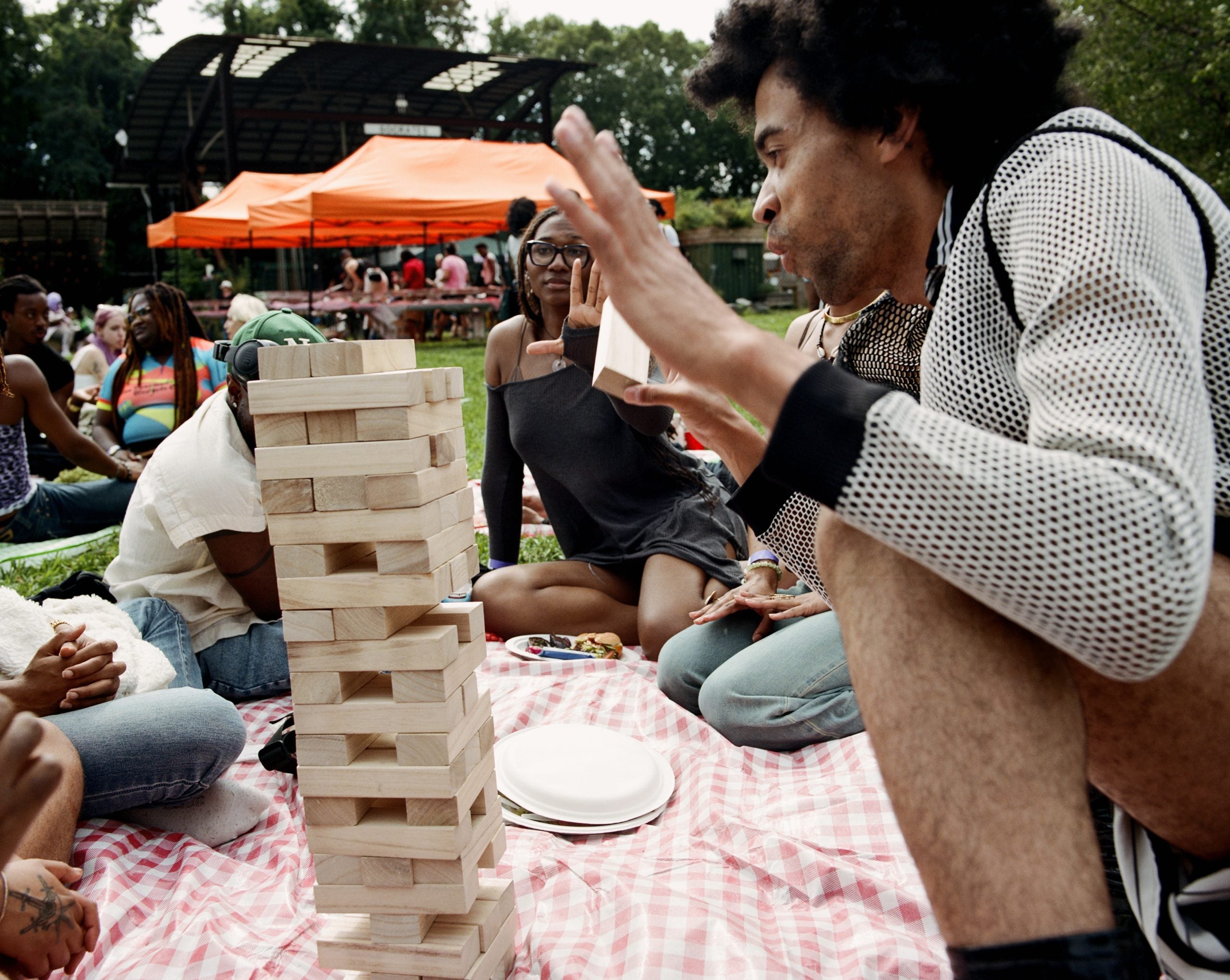
Angel and her fellow artists at the Angelito Collective carried forward Love’s vision, blending community care with creative expression. “We all take up leadership roles within the collective,” Sol said. “For this event, I was in communication with Gia… even though she’s used to taking care of all the food and running around, I feel like going into it, she still had those expectations of having to fill a lot of shoes.”
The logistics were daunting, but carefully calibrated— Angel explained that even wording introductions to attendees at the reception desk were discussed, to make clear that the cookout was centered on trans femmes and donations were encouraged.
Beyond food and music, the day offered healing and wellness modalities: acupuncture, cupping, massage, and self-defense workshops. “We have people offering healing beyond just coming, listening to music and eating a meal with your community,” Angel said.
Partnerships with supportive brands provide access to resources that might otherwise be out of reach. Sponsors for the event include James Veloria, Okra Project, Shea Moisture, Flamer Marijuana, Gotham Food Pantry, Pixie Scout, and Black Trans Liberation.
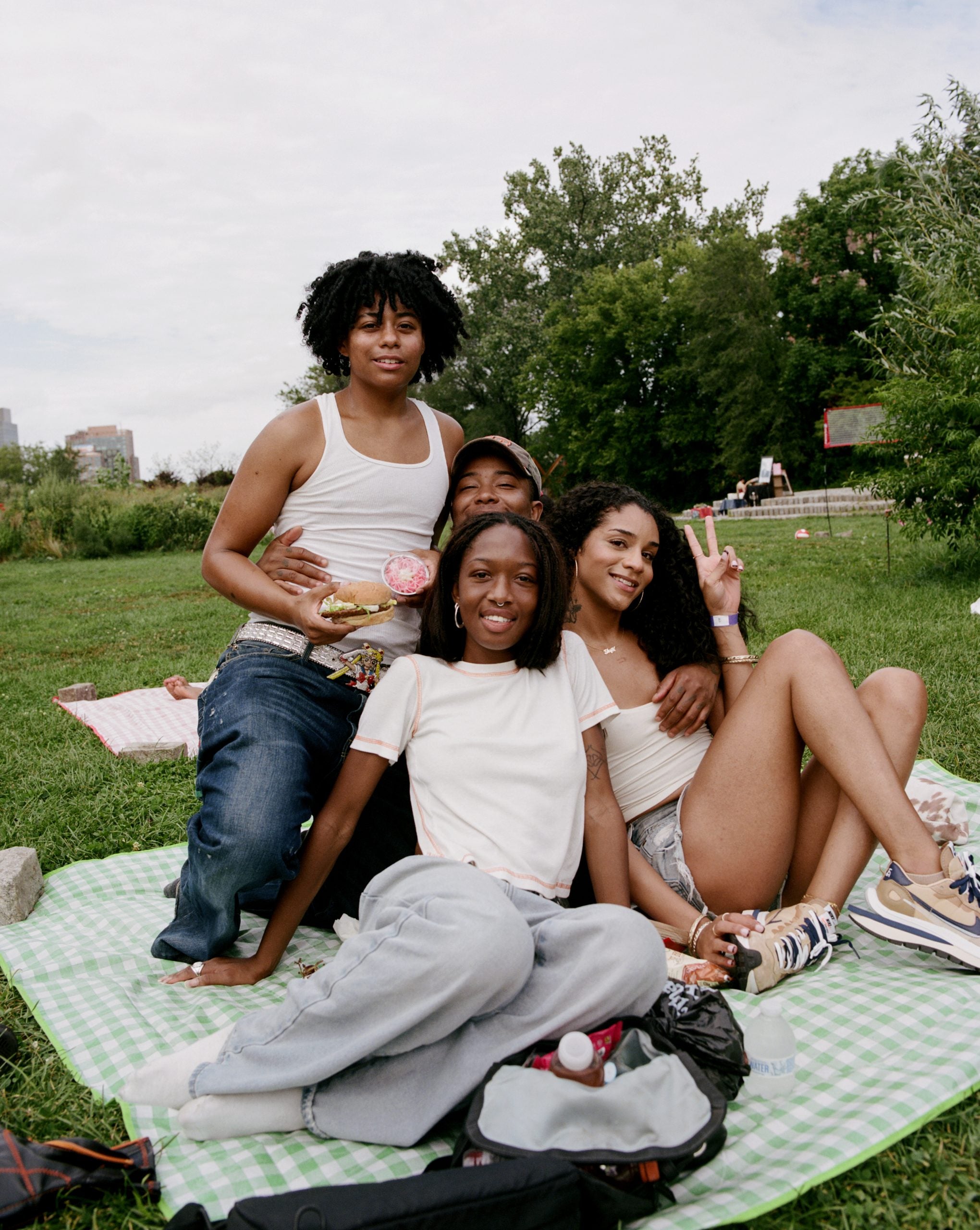
For attendees, the day is a rare opportunity to inhabit a space centered on Black trans joy. “I feel like this is the only place I’ve ever been that has, like, as many Black trans women as I’ve seen, and so it’s just a very nice event to come to, just to be around the community,” said Kami, 23. “The music is great, food is great, vibes are great, everyone looks great.”
Fashion, a model, DJ, and artist from Oregon, was attending her second cookout, noting with a laugh, “This is my second time, and I know they didn’t have one last year, like, how?” She explained how she found out about the event: “I’m friends with Gia. I know the Angelito Collective…so many of my friends are here. So it’s only natural that I would know about it.”
On why she keeps coming, she said, “Black trans joy and community…just seeing all of my motherfucking sisters.” Reflecting on living in New York, she added, “It’s everything. It’s all about the people and all the intersections. Of course, it’s Trans America…you can expect to see me here the next year and the year after next, whenever I can come.”
Performers included Lita Da Doll, a pioneer of “Ghetto Gospel,” DJ SEXINCHURCH (Geneva Love Frazier), rapper Rah Rah Gabor and Telfar B2B Niidal.
The cookout does not shy away from the reality that Black trans lives are under threat— there’s even a self defense class at the cookout.
Transgender people, particularly Black and Latina trans women, face disproportionate rates of violence and discrimination—statistics that hover in the background of every celebratory gathering. Yet, as Sol emphasized, “Keep showing up for Black trans women… this work is not easy, you know, like we’re pulling away from our own identities, our own individual experiences to show up for our communities.”
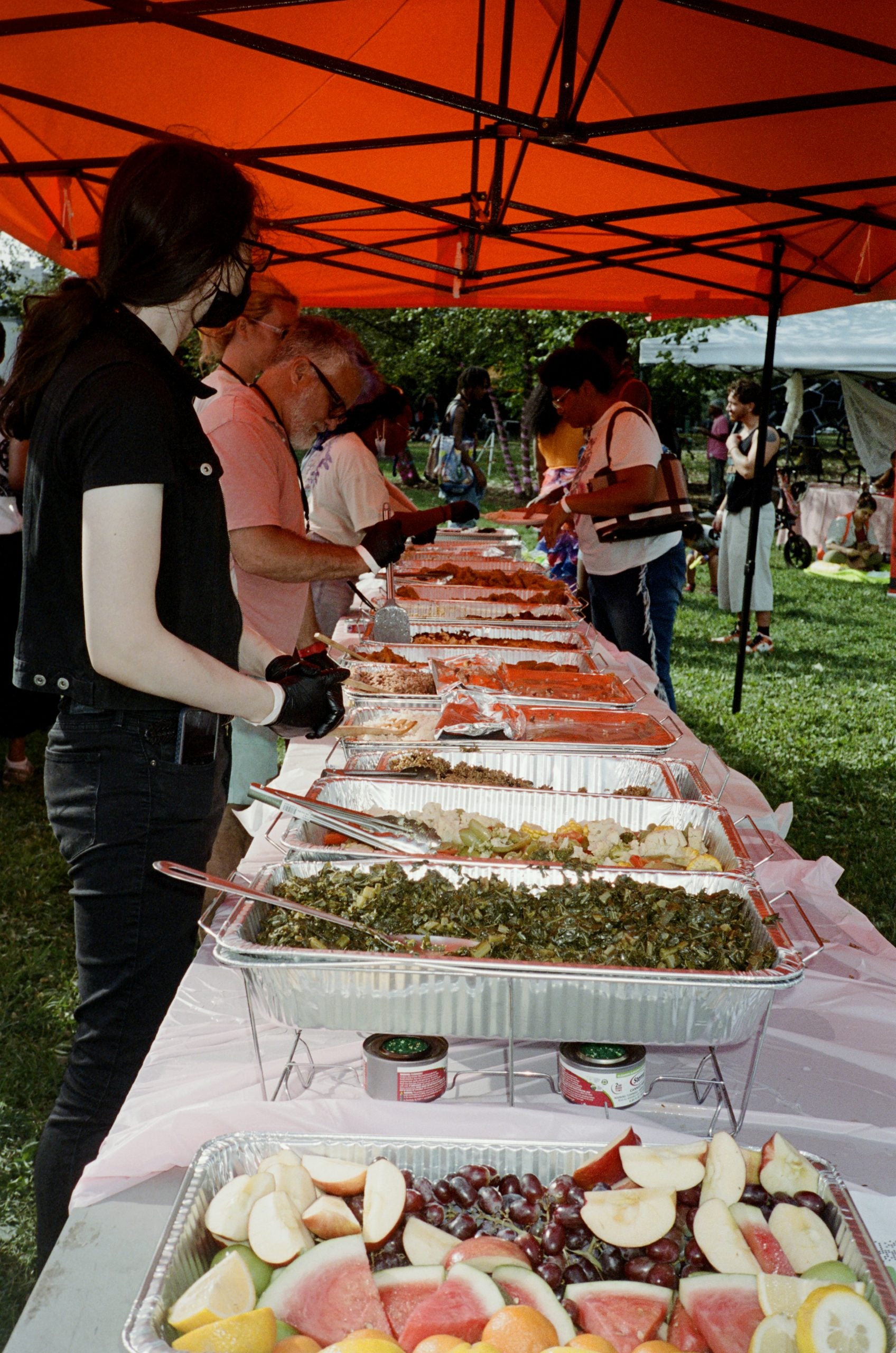
For Josie Ferreira, a New Yorker attending her third cookout, the event is a rare chance to gather across boroughs and deepen bonds. “It feels good, especially to be around the community and your sisters,” she said. “We all come together. I feel like there’s people here that I see around, but I never really get to spend time with them… we’re being celebrated. We’re celebrating each other, which is special. And, yeah, it’s beautiful.” Even with a bike ride from Bed-Stuy, Ferreira called the commute “worth it,” savoring roasted corn and a bit of everything on the menu.
Beyond food and music, the day offers healing and wellness modalities: acupuncture, cupping, massage, and self-defense workshops. “We have people offering healing beyond just coming, listening to music and eating a meal with your community,” Angel said. Partnerships with supportive brands, like Flamer, provide access to resources that might otherwise be out of reach. “They always give us, free weed… this is something that people never think about. But as Black, trans women, oftentimes we want to smoke a joint, you know, and maybe we don’t have the funds to pay for the weed, but Flamer has shown up for us.”
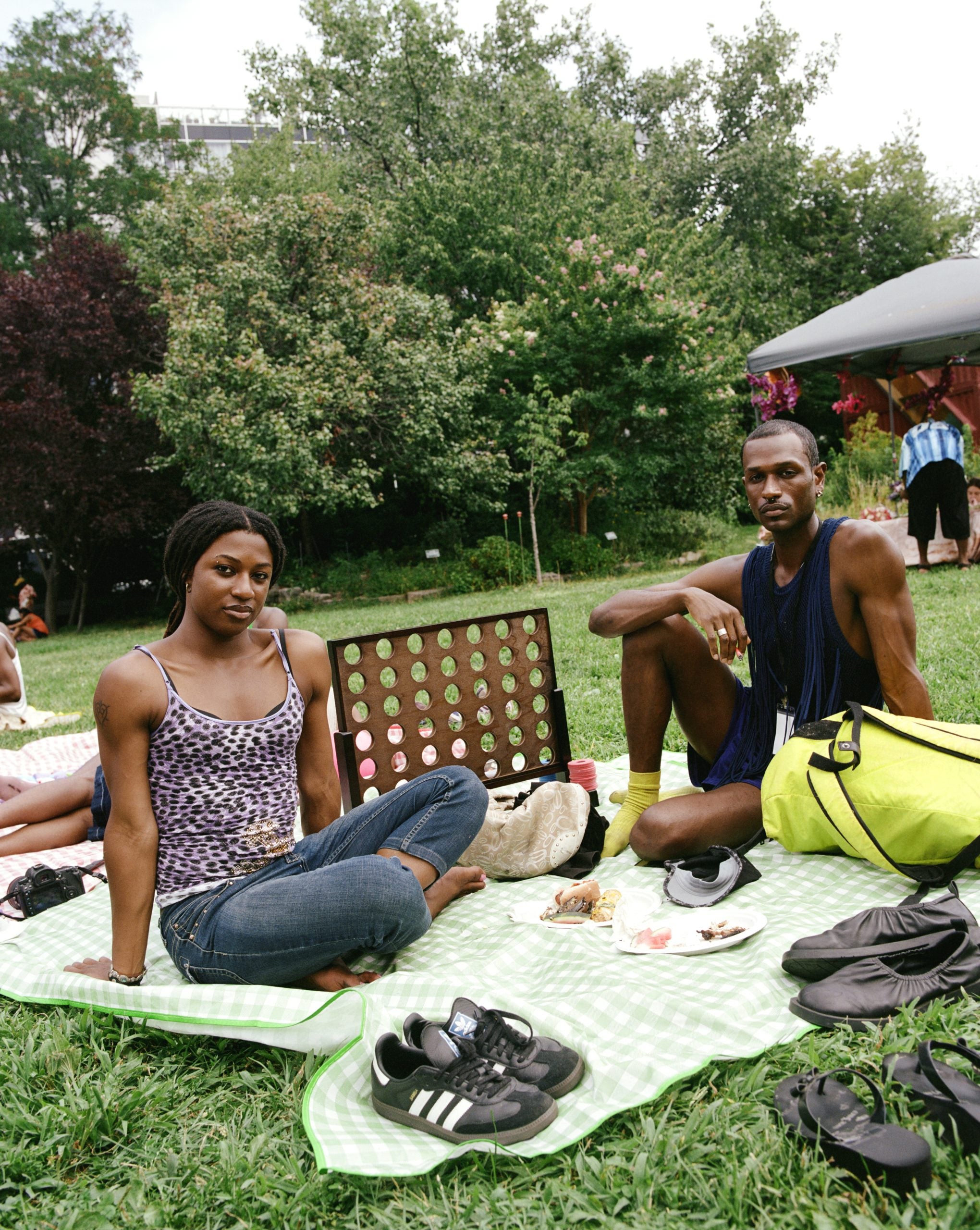
The event’s sheen is visually obvious, with pink and blue balloon arrangements that would go pop every few minutes amid the windy summer heat of Queens. Despite this, the spread of elotés, hot dogs, rasta pasta, grilled chicken, honey-glazed brussel sprouts and char-grilled burgers received a warm reception under the orange tents pitched at the park.
The event also evokes the nostalgia of childhood cookouts, grounding the day in familial warmth. Angel reflected on her own early experiences: “My mom would always do these Angelitos for when I used to get sick a lot as a kid, and some of my cousins would get sick…she’d tell God and Jesus and in the end, we were always okay.”
For younger attendees, visibility matters. “I feel like, yeah, we’ve done some work with the MoMA…allow them to be in the space to show their work. And now the collaboration has evolved because they really like the work that we did,” Angel said, pointing to past initiatives that foster artistic and personal affirmation.
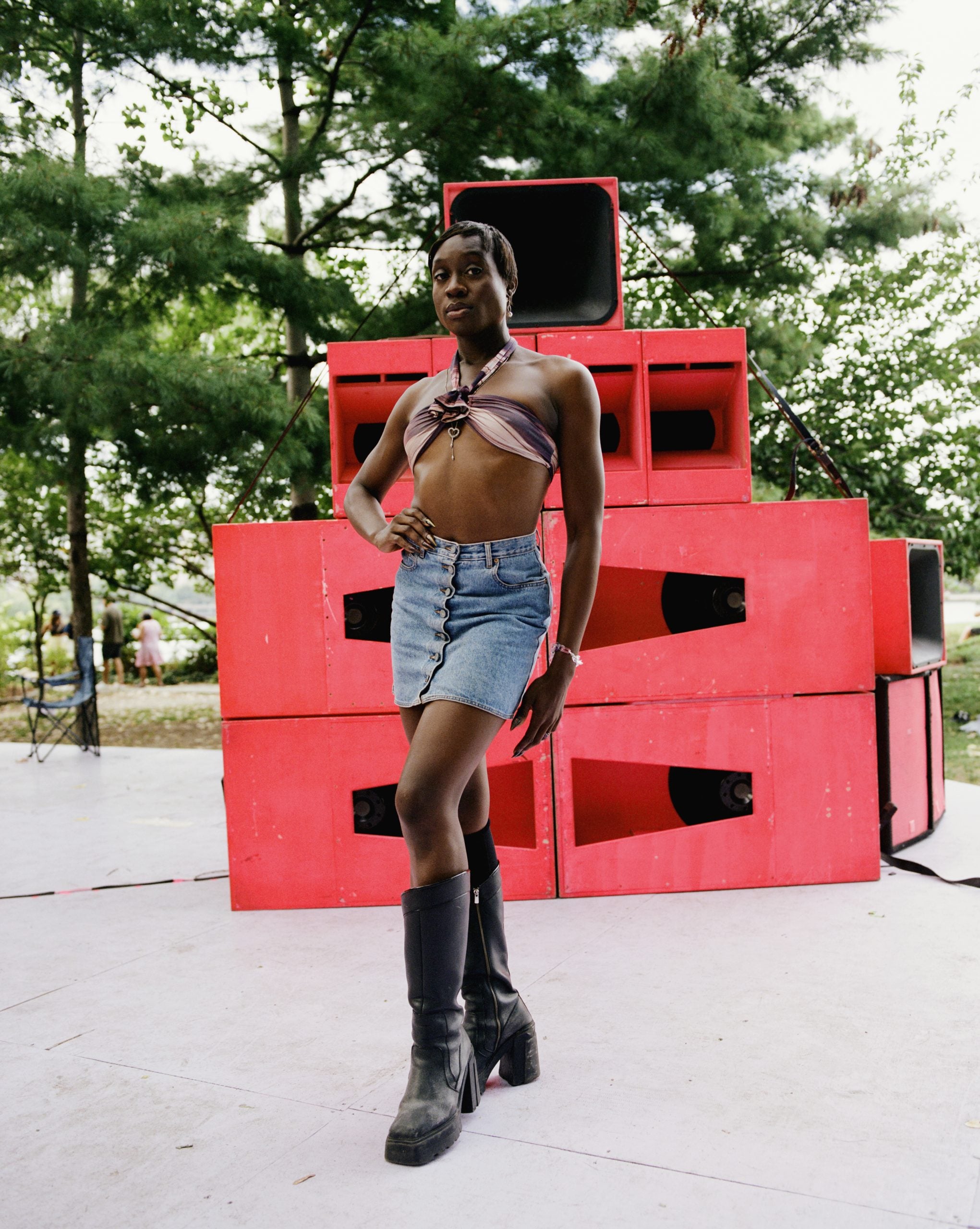
Every detail is intentional, from the curated performances to the moments of quiet reflection at the Marsha P. Johnson shrine. “This is something that plays a role in the language of all of this, at least,” Sol said. “Our existence is trying to be erased. And this work is not easy…we’re showing up for our communities.”
The cookout is, in essence, an assertion: joy as resistance, visibility as affirmation, and community as survival. “When we have an opportunity to, like, be visible to children is totally amazing,” Angel continued. “Collectively, we are uplifting each other creatively, but also within our communities, and offering spaces for our community members to like, come together and learn from each other.”
Children watching, listening, and participating witness models of resilience, leadership, and creativity.
“Everything that we’ve been able to accomplish up to this point is because we were all like, this is going to happen, period,” Angel said. “We already dreamt it.”
As the sun set over the East River, the music faded but the warmth lingered. “Creating a space of love where people can feel a sense of belonging and know that they are not alone, that they are loved and mean something to a lot of people is very important,” Sol said.
In the quiet that followed, the cookout held a simple truth: care and connection are as radical as they are necessary.