
During its peak, New Orleans’ Lincoln Beach was a sight to behold: lithe divers careened into deep pools, and eager crowds lined up for carnival games and concerts. During Jim Crow, its grounds offered a haven for the city’s Black population during a time when African Americans were banned from other waterfront parks in the state. But when neighboring beaches were desegregated in 1964, the park shuttered and eventually, after decades of abandonment, became inhospitable.
Born and raised in the Crescent City, artist Auudi Dorsey first learned of the beach in 2013, hopping trains and passing through forests to reach its then-dilapidated grounds. He was amazed to realize its Black history and began researching the waterfront, asking community elders to share stories and seeking out archival images and documents, subsequently sketching imagined scenes from its heyday. He discovered photographs of Black New Orleanians diving and swimming by the coast, fitted in retro gear. These images stood in contrast with the New Orleans that he knew. “I’m looking at these kids approaching water from a different experience, versus how people look at water during post-Katrina,” he explained. A picture of youthful students donning wraparound swim caps, ready for lessons, especially struck him. “I was like, ‘I want to recreate that feeling.’ … That was a very beautiful moment to see these kids in such confidence.”
When Dorsey was invited for a residency at Jonathan Carver Moore Gallery in San Francisco, it felt like the right moment to revisit the sketches of Black swimmers he had been developing for years. Working in a spacious studio, he was able to paint on a grand scale — his largest paintings yet — rendering these Black swimmers at life size. Six of the works from the new series debuted in the exhibition What’s Left, Never Left on October 9, and will remain on view through January 31, 2026.
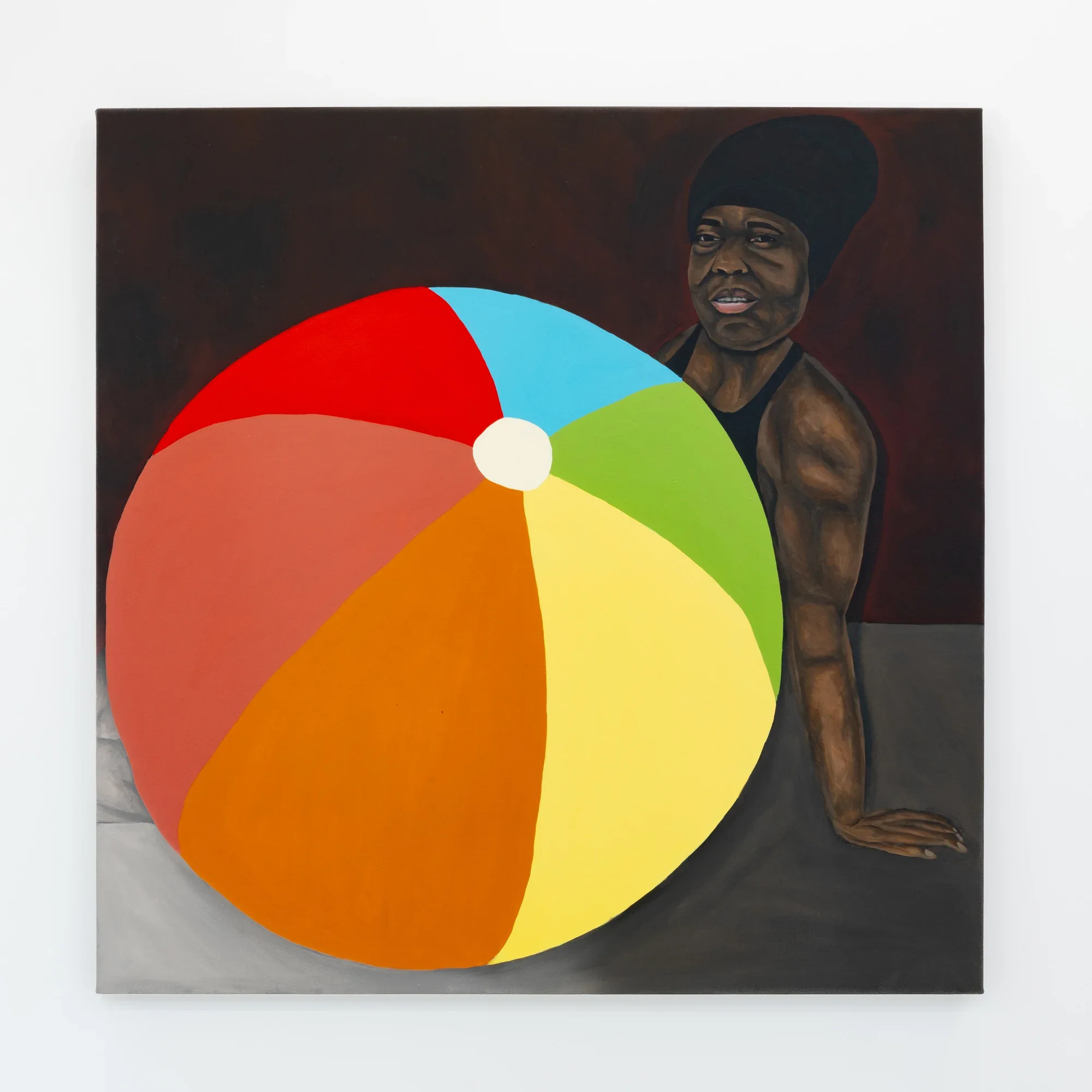
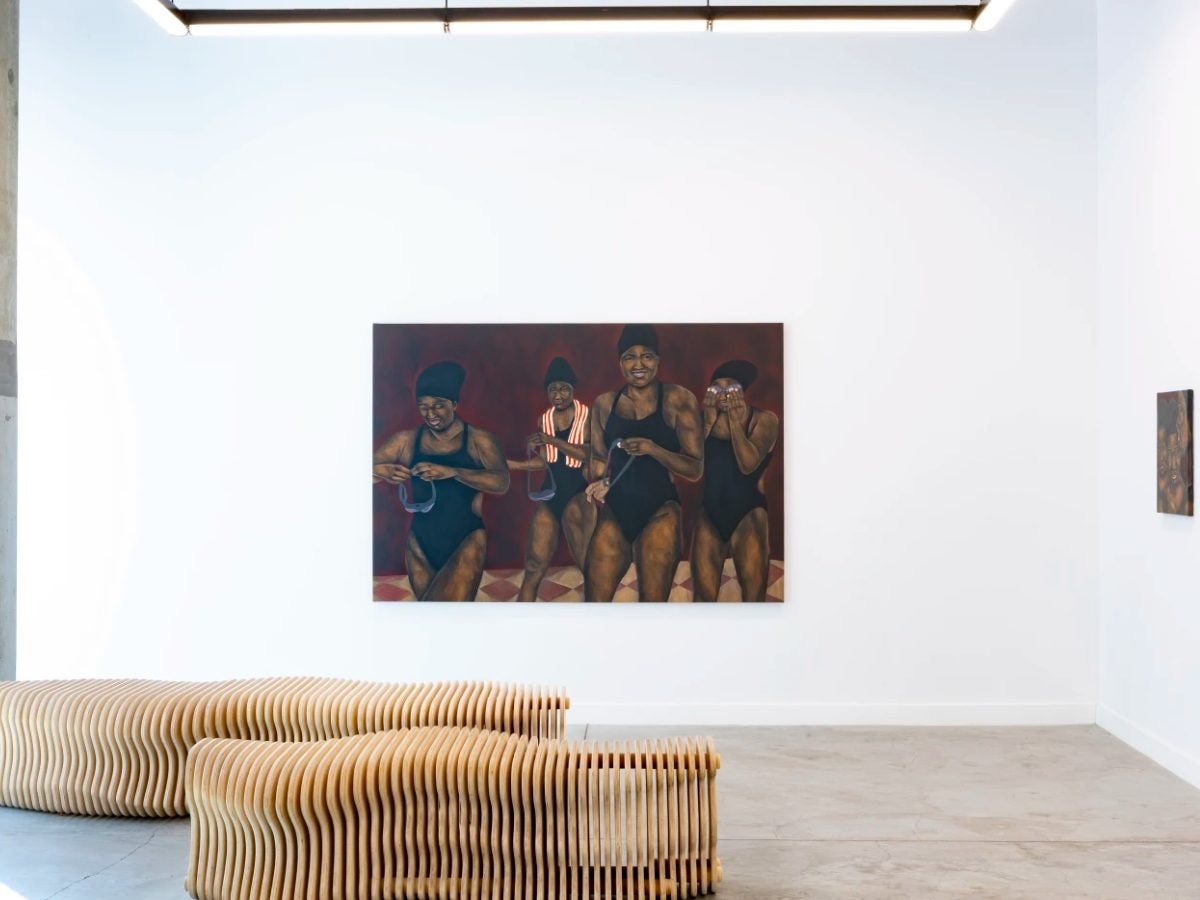
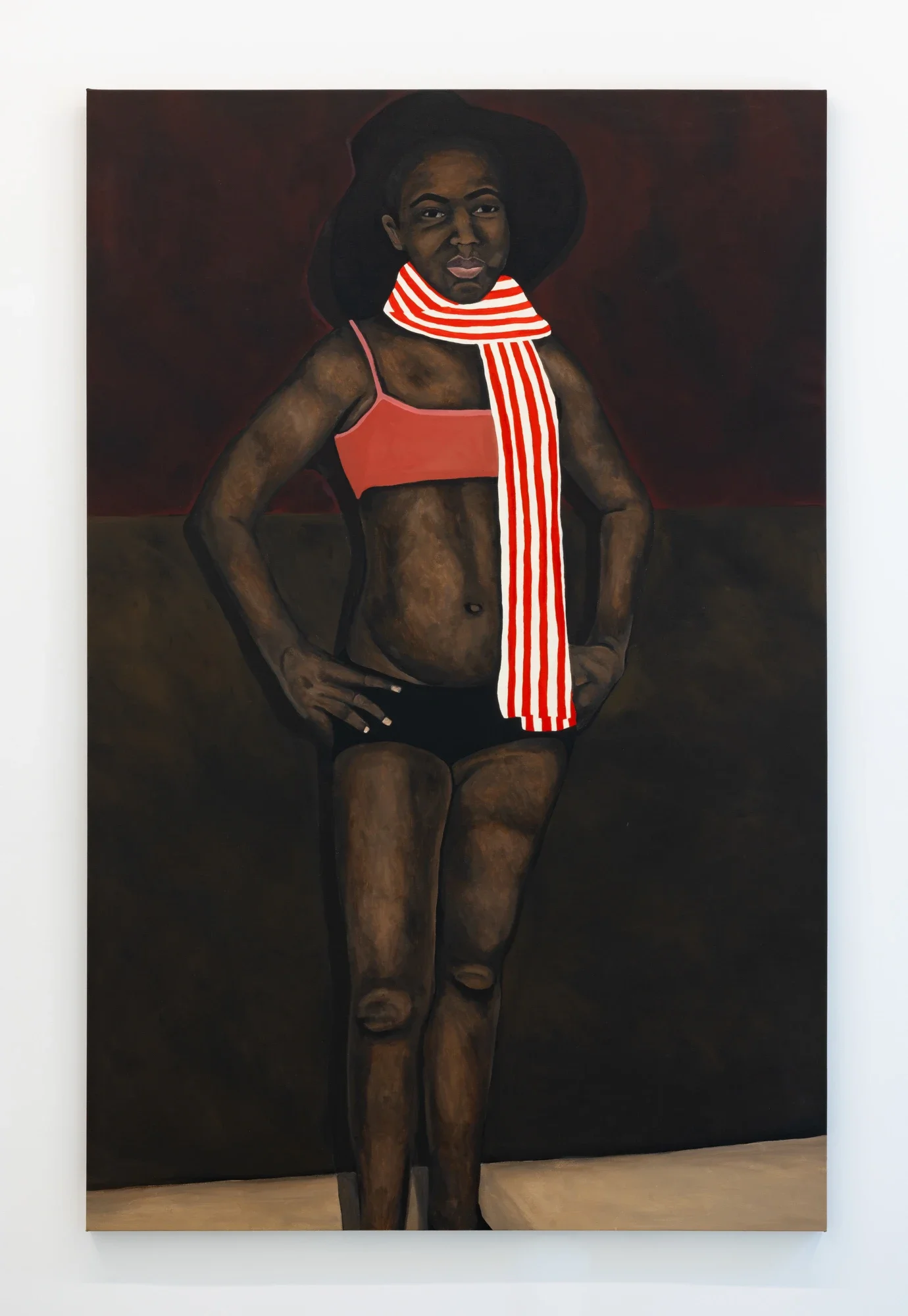
Full of whimsy and introspection in equal measure, Dorsey’s paintings both celebrate and mourn the history of Lincoln Beach, as well as the joy it brought to Black New Orleanians during segregation. The protagonist of “Where the Sand Meets Water” (2025) stands in adolescent triumph, with a retro-striped towel wrapped around her neck. Across the room, “A Day Like 1964” (2025) features smiling girls adjusting their goggles while donning black swimsuits, and Soul Caps protecting their hair. In the center of the light-filled gallery, a reclining bather is concealed by a jumbo beach ball rendered in vibrant multicolor, an exciting contrast to Dorsey’s otherwise darkened canvases.
Dorsey’s brooding palette was born out of rebellion to restrictive instruction. A professor at Tulane University told Dorsey that Black pigment “doesn’t have a place in painting” — an insult to what Dorsey knew to be true, which was the richness and possibility of the shade. He used the offense as fuel. “I actually layer my paints with black first,” he explains. “So I kind of took that, and I made it like my superpower. […] I’m literally painting over black and allowing black to be the undertone to all my colors, my skin complexions, and everything.”
This celebration of Blackness supports Dorsey’s focus on community: heralding Black histories of the South, as well as his excitement over collaborating with Jonathan Carver Moore to present the series. Established in the historic Tenderloin District, Jonathan Carver Moore is the only Black and queer-owned gallery in the Bay, with its focus on artists of color, queer artists, and women artists.
“He’s the first Black gallery owner I’ve ever shown with in my career,” Dorsey mused. “So that was also a monumental moment for me, being able to have my works finally represented by a Black gallerist. So that was one of the biggest things I was proud of, to build that community with a Black gallery.”
Since opening in 2023, the gallery has experienced an outpouring of support from local art lovers, hundreds of whom pack out the openings and talks, an affirmation of the gallery’s necessary role in highlighting underrepresented artists in the city’s art scene. “It makes me so happy to see people know that they are welcomed here. I want you to be able to come here and look and ask questions,” says Carver Moore. The gallery’s residency program is a recent affirmation of its commitment to spotlighting underrepresented artists; Dorsey was the third resident, while Cameroonian artist Sesse Elangwe Ngeseli is its current, with Alvin Armstrong following in 2026.
Now, back in New Orleans, Dorsey is continuing the aquatic series, working on his first bronze sculpture, depicting a swimmer, which he intends to donate to the Lincoln Beach Center, a community group preserving the history of the former amusement site. Soon, and for the first time since the 1960s, New Orleanians will be able to enjoy the beach. Grassroots revitalization efforts have been ongoing since 2020, spearheaded by local artist Reggie Ford, and the city is proceeding with a multimillion-dollar revitalization plan. An official reopening is expected in 2027. What’s Left, Never Left, comes at the perfect moment, extolling the legacy and joyfulness of a neglected history just as its enduring resilience takes hold in the public.