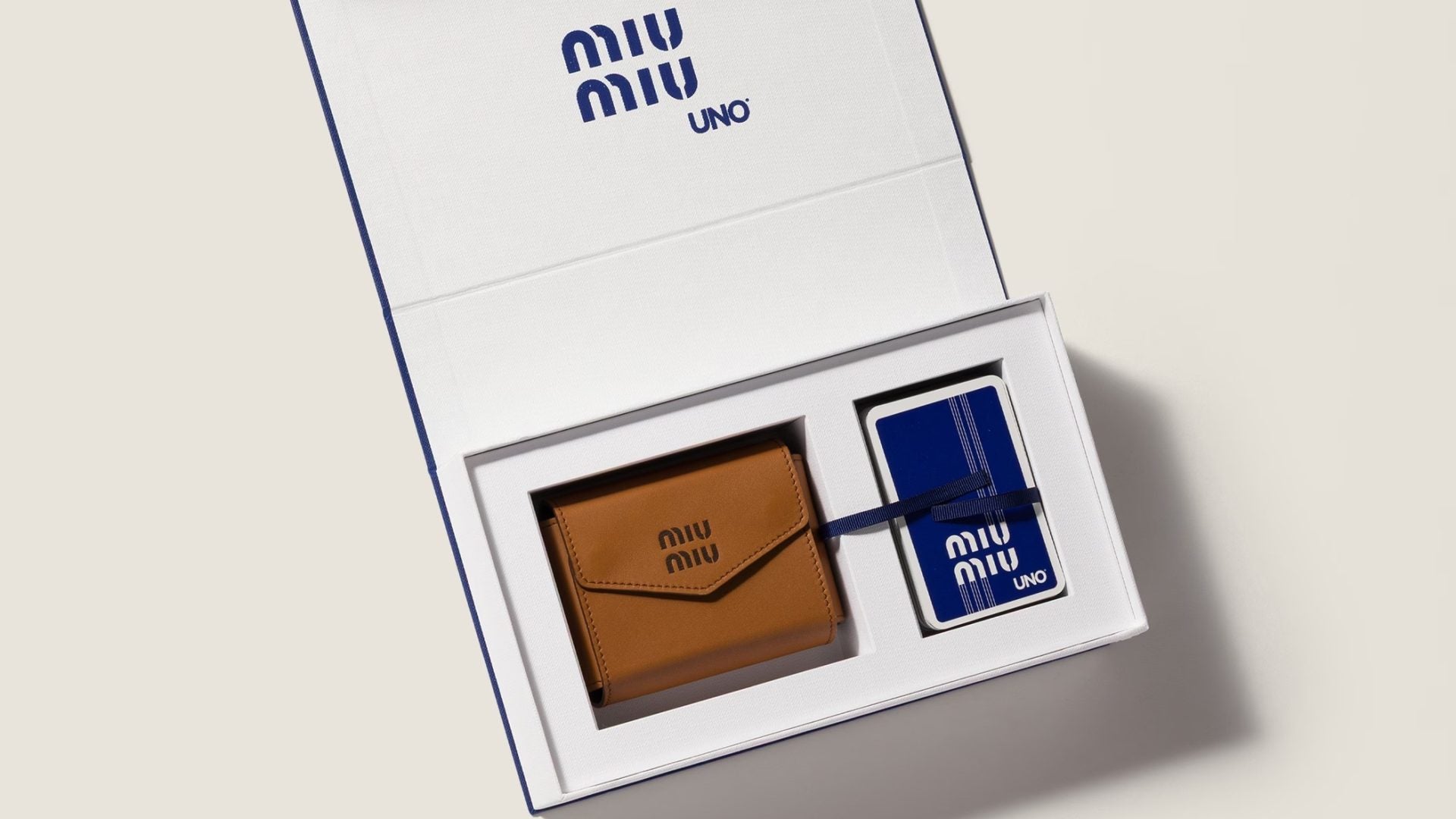

Luxury fashion fans enjoy everything from ready-to-wear to lifestyle finds. And now, brands like Miu Miu and Bottega are offering customers a new reason to spend. Insert: fashion board games.
In late 2025, Bottega Veneta debuted a collaboration with Jenga, releasing a luxury Jenga set. More recently, Balenciaga unveiled a branded Monopoly game, though not for sale, offering it exclusively as a gift for VIP clients. These releases signal a shift towards experiential and lifestyle-driven luxury rather than wearable goods.
But while these launches feel new, luxury brands have long played in this space. Phia Dennis, creator of the Substack Consumer Digest shares with ESSENCE, “premium luxury brands have done similar things historically.” Hermès and Louis Vuitton, for example, “both have Mahjong sets… they’ve had them for quite some time.” These objects were never meant for mass audiences. Instead, “those have been things for like, the super fans… the people that are buying their furniture, buying their home goods, and are not just buying the handbag.”
This distinction helps explain why today’s luxury board games fall into two very different camps. On one side are youth-driven brands that lean into collaboration and recognition. “Tapping Jenga, tapping Uno—that’s something that’s super fresh,” Dennis added, particularly for brands that are “more youth dominant.” In an era where “young people are so obsessed with collabs and so collab-forward,” partnering with a familiar game becomes “a social media moment.”
That visibility is intentional. “The Miu Miu Uno is obviously branded, Miu Miu,” while “the Bottega Jenga is very clearly branded Bottega Jenga.” These products are designed to be instantly legible online, to photograph well, to circulate quickly, and to reinforce brand identity in feeds as much as in homes.
On the other side are heritage houses like Hermès, whose games operate under a very different logic. “They are not in collaboration with brands because they’re not trying to make it a social media moment,” Dennis explains. The Hermès Mahjong set, for instance, is intentionally understated. “It’s more like, quiet… you’d just be like, ‘Oh, that’s a nice set.’” There’s no orange box, no overt logo—“literally nothing about it says Hermès.” What signals luxury instead is “the quality and the craftsmanship.”
That subtlety also means these objects aren’t optimized for visibility. “If you post this on Instagram, nobody’s gonna be like, nothing jumps out at you,” Dennis notes. “But if you see the Miu Miu Uno set, you’re like, ‘Whoa.’” In other words, recognition versus knowledge: one is meant to be seen, the other understood.
The question, then, is whether luxury board games can function as true entry-level products. The answer is complicated. Bottega Veneta’s Jenga set retails for $6,900—roughly $1,000 more than its medium Andiamo bag—thanks in part to its Intrecciato calfskin leather case.
By contrast, the brand’s Intrecciato playing cards, released in December 2023 for $920, sit closer to traditional entry-level pricing. Miu Miu’s $575 Uno set, complete with a leather cardholder, similarly targets younger, brand-loyal consumers who may be priced out of ready-to-wear but still want a piece of the brand.
Still, the intent behind these products remains ambiguous. Some are designed to drive buzz, while others are designed to reward insiders. As Dennis puts it, Hermès’ games aren’t for customers “posting their mahjong set right online or including it to be tagged.” They’re for a client who already understands the brand and doesn’t need to announce it.”
Luxury lifestyle objects are not a new concept. From Chanel-branded surfboards to Hermès tabletop games and home accessories, fashion houses have long extended their identities beyond clothing and accessories. Rather than reinventing the wheel, luxury board games represent a natural evolution of these earlier lifestyle and home products to attract a younger consumer.
According to Bain, luxury spending dropped from $400 million in 2022 to $340 million last year, as rising prices continue to push consumers out of the market. As demand softens, brands may need to rethink accessibility. Whether board games can replace lighters, mugs, and small leather goods as the new gateway into luxury, or simply exist as novelty collectibles, remains to be seen.
While some are designed to be photographed, shared, and instantly recognized, others are meant to exist quietly in private homes, valued for craftsmanship rather than clout. Either way, their emergence signals a broader shift in how luxury houses connect with audiences in an era where visibility and ownership no longer mean the same thing.