

I will never forget the last Christmas I spent with my mother because I hated it. A few weeks before the holiday, we decided she would no longer undergo treatment for her breast cancer or multiple sclerosis. We knew the end was near, but had no idea when it would arrive. We were told six months to a year, which I now know means, “Your person could die any day now.” I knew it would probably be our last Christmas together, and the pressure to try and create a perfect holiday for a dying woman, plus the stress of her end-of-life care, my work, our collective worry about what would happen when mom actually died, plus the searing pain of grief, it was honestly all just too much. We went through the motions, but there was very little genuine holiday cheer, just sadness, stress, uncertainty, and heartache.
Grieving during the holidays is hard, and in every discussion I’ve had recently, it feels as though the collective grief and uncertainty of this year has us all a bit untethered. Recent conversations with colleagues, family, and friends usually start out with someone saying, “I’m doing OK.” Still, when pressed, and I press because I’m a writer and feelings person, people are struggling. It feels as though we are all hanging by a proverbial thread that’s about to snap. Political and economic uncertainty coupled with personal losses and conflicts around the globe, have all created an epidemic of exhaustion that is firmly rooted in grief.
In my first book, Grief is Love, I define grief as “the repeated experience of learning to live in the midst of a significant loss.” Grief does not solely apply to the loss of a human being; grief is a set of feelings that come when you lose a part of your future that you previously counted on. For me, this year has been filled with grief and a level of physical pain previously unimaginable as I navigate a loss of my health thanks to a long COVID diagnosis, the loss of my grandmother, and the loss of our family’s beloved dog, Sadie. Truly the best dog to ever live.
For better or worse, like an unwanted and uninvited guest, grief tends to show up in a myriad of ways during the holiday season. The call to be merry and bright seems laughable when your heart feels like lead, and even getting out of bed seems like an arduous task.
So, how to get through it? None of these stressors or causes of grief is going anywhere anytime soon, and I refuse to pretend this Christmas. I simply don’t believe in a “fake it ’til you make it” strategy when it comes to the pain of grief and uncertainty. Fundamentally, I think we are all better than that, and when it comes to toxic positivity, there is simply no room for it when you’re grieving and trying to heal. Instead, I suggest the following.
Acknowledgement
You cannot heal from that which you do not acknowledge. In the absence of proper acknowledgment of our collective grief, we have to create space to acknowledge our shared and individual losses ourselves. Clinical psychologist, Lizzie Cleary, PhD, suggests “that by replacing stock answers with genuine feelings, you will likely model and give permission for others to do the same which can deepen connections.” During this holiday season, talk openly about your grief and create space for others to do the same. Be honest and authentic about what you’re going through. The collective trauma of the last few years requires collective healing so don’t shy away from sharing your grief. Your loss is yours alone, but you don’t have to heal alone.
Boundaries
If the holidays have you feeling fragile this year, and you’re worried that family members or friends might try and force you “to turn your lemons into lemonade” and you’re just not there, establish and articulate clear boundaries. Be intentional about what you need and who you surround yourself with during this holiday season. And remember the old adage, people who don’t respect your boundaries probably benefited from you not having any. Just because everyone else is gathering for Christmas Eve doesn’t mean you have to join if you’re not ready. Give yourself permission to Netflix and chill instead.
Care
Like so many other things in this country self-care has been white-washed and commodified by wellness influencers and corporations, but I think real care in the face of grief and uncertainty is so much more than a day at the spa. It’s about being honest and authentic about what you need to be OK today. If you know grief, you already know that what you need today might be different from what you need tomorrow, and that’s OK. Sometimes, in the midst of work, writing, parenting, and grief, I just need a 15-minute reset. It doesn’t cost anything, it doesn’t require me to leave my house, it usually just requires me to hide from my child and my clients and close my eyes and reconnect with myself for a few minutes. Care isn’t about any one particular action, but it is about being intentional about your needs.
Do it your way
Right after my mom died, I found celebrating the holidays really hard. My mother was quite literally the queen of Christmas. She was so good at making the holidays big and beautiful and special, no matter how much money we did or didn’t have. After she died, I honestly have no idea what I did for Christmas those first few years. When I started dating the man who would eventually become my husband, he suggested we brighten up the holidays by developing some of our own traditions to honor my mom. We started an annual party called Tacos and Baby Jesus, where people get dressed up in ridiculous costumes, we make tons of tacos, do a cookie exchange, and host a food drive for the local pantry. The entire event is about finding our own way to include my mom in Christmas on our terms. When you lose someone or something you love, you get to decide how to honor that loss, so feel free to celebrate Christmas, Hanukkah, or your birthday in a way that really makes sense for you.
When we ignore grief, it doesn’t go away; it simply manifests in other forms. No one benefits from you pretending to be OK when you’re not. In a recent holiday grief gathering with my friend, author, and grief expert Claire Bidwell Smith, she also reminded me that, “If we can take the time to share our grief with others, no matter how hard it might be, it opens the possibility of supporting each other through our losses. You don’t have to do this alone.” Perhaps this holiday season, instead of pretending to be OK, we can instead redefine what it even means to be OK. I hope this holiday, instead of simply powering through, you choose to let folks in and create opportunities for healing and wholeness by sharing your pain.
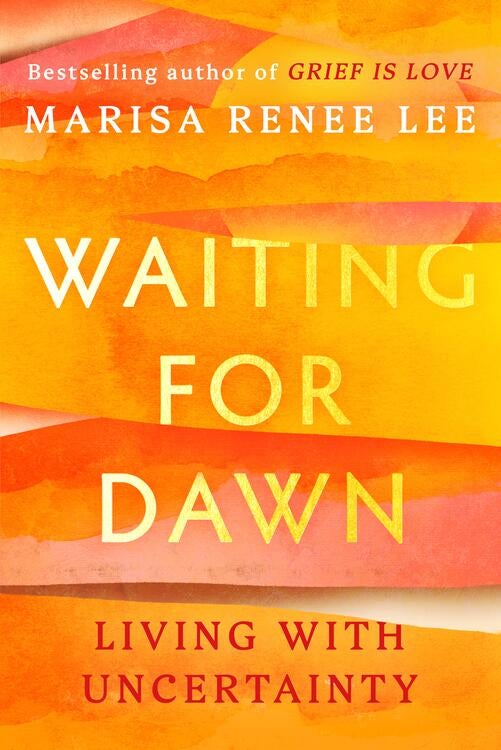
Marisa Renee Lee is a called upon grief advocate, writer, speaker, and entrepreneur. She is the author of the bestseller, Grief is Love: Living with Loss and the forthcoming Waiting for Dawn: Living with Uncertainty, CEO of Beacon Advisors, and former Deputy Director in the Obama White House. She lives in the Hudson Valley with her husband Matthew and son Bennett.